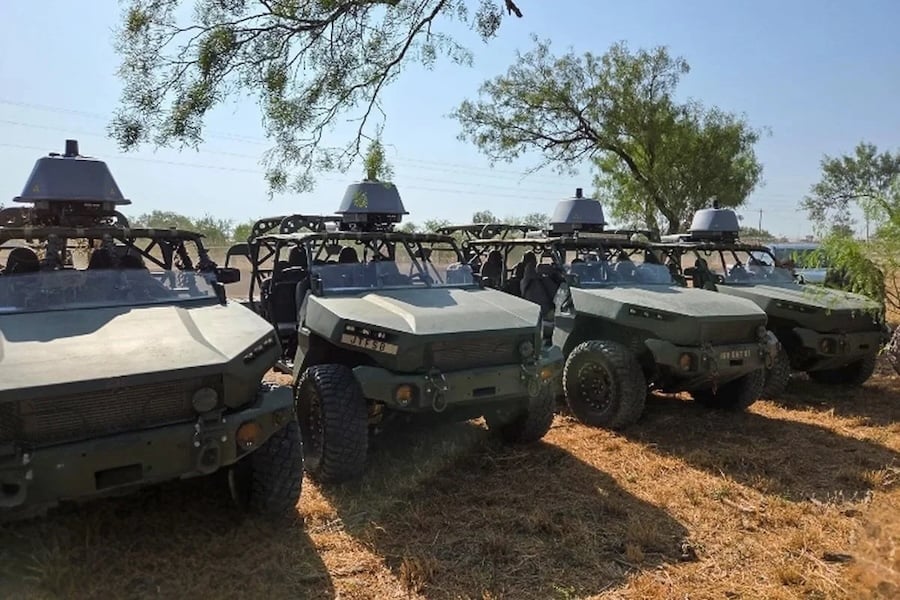
The 80-day delivery cycle covered equipment delivery, integration onto the vehicles, acceptance testing and operator training. Three more DroneSentry-X Mk2 units are due to be installed under a recent contract modification.
DroneSentry-X Mk2 provides detection and electronic countermeasure capabilities against uncrewed aircraft. Mounted directly on the Infantry Squad Vehicle, the system can operate while the vehicle is moving or stationary.
The configuration is intended to extend counter-UAS protection beyond military bases and other fixed infrastructure. It allows units to carry detection and electronic countermeasure equipment with them during operations in areas where permanent defenses are unavailable or impractical.
DroneShield personnel installed the systems and supported acceptance testing involving live uncrewed aircraft. The company also trained the operators, allowing the equipment to enter operational use after acceptance rather than remain at the initial delivery stage.
“Counter-UAS capability has to be deployable at the speed the threat is evolving,” said Nate Webb, director of strategic projects at DroneShield. “In approximately 80 days, our team moved from contract award through delivery, vehicle installation, live-UAS acceptance testing and operator training.”
“Reaching initial operational capability is a strong demonstration of what it takes to turn a counter-UAS requirement into capability in the field,” Webb said. The milestone shifts the program from procurement and integration to an accepted mobile capability.
The deployment comes as small uncrewed aircraft increasingly present mobile and inexpensive threats that fixed defenses alone may struggle to address. JIATF-401 is working with military commands and interagency partners to field technology, training and operating authorities for counter-drone missions.
“We know that there is no silver bullet to defeat every drone threat and that counter-UAS capabilities go beyond technology,” said U.S. Army Brig. Gen. Matt Ross, director of JIATF-401. “The threat continues to change, and our work at the Southern Border is not finished.”
“We will continue working alongside USNORTHCOM, JTF-SB and our interagency partners to deliver the capabilities our warfighters need to stay ahead of the threat along with effective training and authorities that enable them to make the right decisions when countering drone threats at home and abroad,” Ross said. The task force’s work combines equipment fielding with the procedures and training needed to operate it.
DroneShield supports U.S. Department of War requirements with radio-frequency sensing, electronic countermeasures, command-and-control software and AI-enabled technology. Its systems cover dismounted, mobile and fixed-site applications.
The company’s technology is also listed on the JIATF-401 C-UAS Marketplace. That provides authorized U.S. government customers with an established channel for procuring counter-drone equipment.