
Cash generation told a similarly stark story. Operating cash flow climbed to $3.2 billion from just $201 million a year earlier, while free cash flow reached $2.9 billion, reversing a negative $150 million figure from the same quarter last year, a turnaround significant enough that Chairman, President and CEO Jim Taiclet used it to frame the entire quarter.
“We delivered strong second-quarter performance, with over $20 billion in sales – a year-over-year increase of 11% – free cash flow of $2.9 billion, and $65 billion of new orders, which takes our backlog to a record $230 billion,” Taiclet said, pointing to a book of business now larger than at any point in the company’s history.
For Taiclet, the numbers were less important as a standalone result than as validation of a strategy the company has been pursuing for several years. “This continued performance reflects more than just increased customer demand – it is evidence that our 21st Century Security® strategy, and its focus on integration, partnerships and operational excellence is working, resulting in increased business, and advancing the security needs of our nation and allies,” he said.
That confidence translated directly into a revised outlook. “We are delivering on our strategy, achieving a higher trajectory for our business and giving us confidence to raise our full year financial guidance,” Taiclet said, adding that Lockheed now expects sales growth of roughly 8% for the full year, a 28% increase in segment operating profit, and free cash flow exceeding $7 billion.
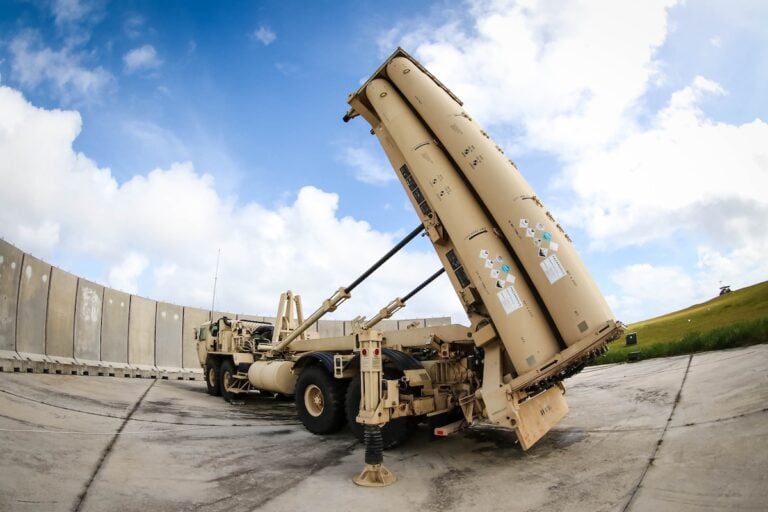
Behind the record backlog sits a $35 billion multi-year contract with the Missile Defense Agency to produce THAAD interceptors, a deal Taiclet framed as more than a single win. “Over the quarter, we took a major step forward in transforming munitions production, putting the framework agreements we announced earlier this year into action by signing a $35 billion multi-year contract with the Missile Defense Agency for THAAD,” he said, describing it as the practical execution of commitments the company had signaled months earlier.
Speed featured heavily in Taiclet’s account of the quarter, particularly around Sanctum, the company’s counter-drone system. “We continue to innovate at the speed our customers’ missions demand, taking our Sanctum counter-drone system from concept to successful live fire testing in just 45 days by combining a battle manager, radar, launcher, and combat-proven missile into one engagement chain,” he said, a timeline that stands out even by the fast-moving standards of counter-drone development, a segment of the defense industry where speed to field has become as competitive a metric as performance itself.
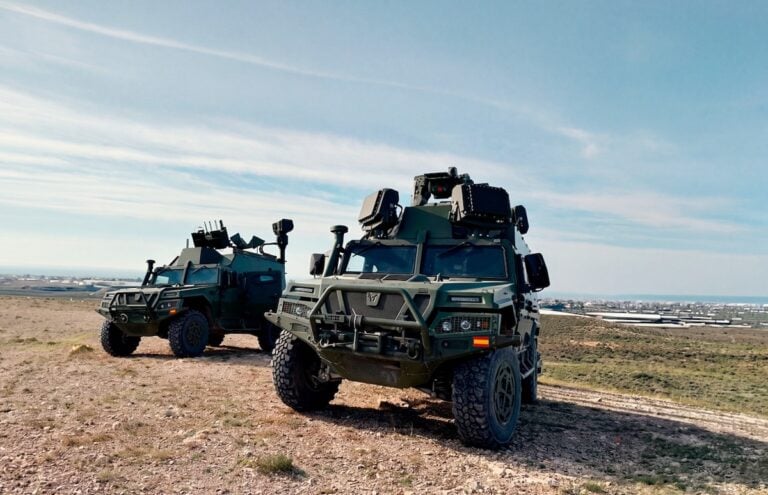
Taiclet also pointed to two industrial partnerships as evidence the company is thinking beyond its own factory floors. “We are investing strategically to strengthen global defense manufacturing capabilities through our collaboration with General Motors Defense in the U.S. and our agreement with Rheinmetall to co-produce ATACMS in Europe,” he said, tying domestic capacity expansion to a parallel push into European production alongside one of the continent’s largest defense manufacturers.
Taken together, the quarter’s results and the accompanying commentary suggest a company that has moved past the program-related setbacks that dragged on its performance a year earlier, and is now leaning into a growth story built on missile defense demand, faster product development cycles, and a widening manufacturing footprint on both sides of the Atlantic.