
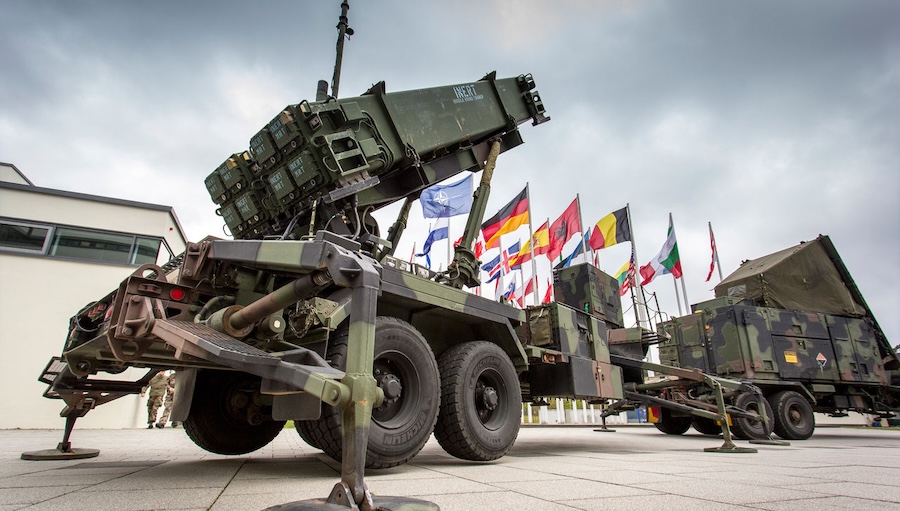
Allies agreed to the upgrade at the 2026 Ankara Summit as part of an updated operational plan for NATO Integrated Air and Missile Defence. The measures are intended to make more effective use of available forces and equipment as threats evolve.
Russia’s extensive missile and drone attacks against Ukraine have demonstrated the demands placed on air defences during sustained combat. In response, Allies have deployed additional capabilities along NATO’s eastern flank and continued training to test their readiness.
Eastern Sentry helps broaden the air defence mission
NATO launched Eastern Sentry in September 2025 after what it described as an unprecedented violation of Polish airspace by Russian drones. The activity brings together traditional military assets and newer technologies, including counter-drone capabilities.
NATO says Eastern Sentry has strengthened its ability to defend against aircraft violations, drone incursions and ballistic missile threats. It has also served as a bridge between Air Policing, which began in 1961, and the broader Air Defence approach.
While Air Policing primarily addressed threats from aircraft, the new posture covers a wider range of threats across air, land, maritime, space and cyberspace. It uses a multilayered, 360-degree approach intended to provide faster responses to changes in the security environment.
Allies with fighter aircraft help protect the airspace of countries that do not have their own, either individually or through multinational deployments. NATO says this allows smaller members to invest in other capabilities rather than maintain costly national air forces.
National capabilities operate within an integrated system
NATO Integrated Air and Missile Defence is a continuous mission in peacetime, crisis and conflict. It protects Allied populations, territory and forces against air and missile threats from state and non-state actors.
The mission operates through the NATO Integrated Air and Missile Defence System, known as NATINAMDS. This connects national and NATO sensors, command-and-control assets and weapons systems under the authority of the Supreme Allied Commander Europe.
Integration allows commanders to coordinate the capabilities available across the Alliance. It depends on technical, procedural and human interoperability, which NATO develops through training and exercises.
NATO’s Air Command and Control systems manage air operations within and beyond the Euro-Atlantic area. Their coverage spans 81 million square kilometres, excluding deployable capability, from northern Norway to the Mediterranean and from eastern Türkiye to the North Atlantic.
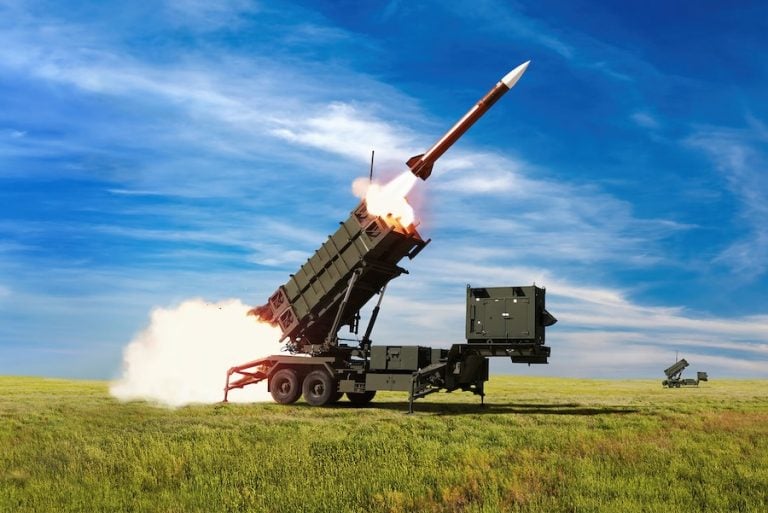
Ballistic Missile Defence remains a permanent activity protecting NATO’s European populations, territory and forces. The U.S. European Phased Adaptive Approach provides a central contribution through ground- and sea-based radars and effectors.
Other Allies are supplying, developing and acquiring assets for integration into that architecture. NATO says these contributions address the growing threat posed by the proliferation of ballistic missiles.
Rotational deployments and support for Ukraine
At the 2023 Vilnius Summit, Allies agreed to strengthen air and missile defence through the IAMD Rotational Model. It provides regular training and rotational deployments of modern capabilities across the Supreme Allied Commander Europe’s area of responsibility, initially focusing on the eastern flank.
At the 2024 Washington Summit, Allies backed further improvements in readiness, responsiveness and integration. They welcomed updated policy and initiatives including the rotational model and the Enhanced Operational Capability of NATO Ballistic Missile Defence.
The Washington Summit also brought agreement on measures to strengthen Ukraine’s air and missile defence. NATO will support and advise on an integrated architecture intended to improve the use of Ukrainian capabilities and enable their transition to full interoperability with the Alliance.
These efforts form part of NATO’s wider deterrence and defence posture. Integrated air and missile defence also helps preserve the Alliance’s freedom of action, including its ability to reinforce deployments and provide a strategic response.
Drone threats drive further adaptation
NATO says Russia’s war against Ukraine has shown how relatively inexpensive drones can be produced and deployed in large numbers. Their use has required the Alliance’s air and missile defence approach to adapt rapidly.
Through initiatives such as Drone Edge, NATO is pursuing offensive uncrewed aircraft capabilities for deterrence and counter-drone solutions for defence. Allies are also improving surveillance, interceptors and command and control, particularly through the NATO Defence Planning Process.
The current system has evolved from the integrated air defence structure introduced in 1961. During the Cold War, that structure was largely static and arranged to counter a defined threat from Soviet crewed aircraft.
NATINAMDS is designed to address a less predictable range of threats from all directions. Several Allies are acquiring or developing additional air and missile defence systems to strengthen that posture.
The Integrated Air and Missile Defence Policy Committee oversees policy and political-military matters and reports to the North Atlantic Council. Military advice comes through the Military Committee Working Group for Air and Missile Defence, while the Conference of National Armaments Directors oversees implementation of NATO’s Ballistic Missile Defence Programme.
Source: NATO.