
Chief Executive Officer Kathy Warden laid out that outlook during Northrop Grumman’s second-quarter 2026 earnings call, pointing to rising U.S. defense spending and what she described as unprecedented levels of investment among American allies. She said the company was expanding manufacturing capacity and investing in advanced factories to increase production rates and volumes as demand for its defense portfolio grows.
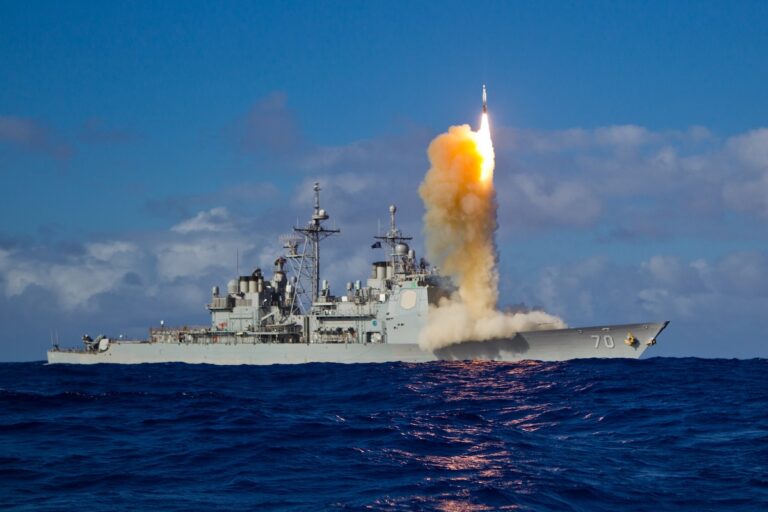
The Middle East is providing one of the clearest signals of that demand. Warden said modern missile defense systems remain an essential national-security priority in the region, with recent conflicts reinforcing the requirement to detect and intercept cruise missiles and drones.
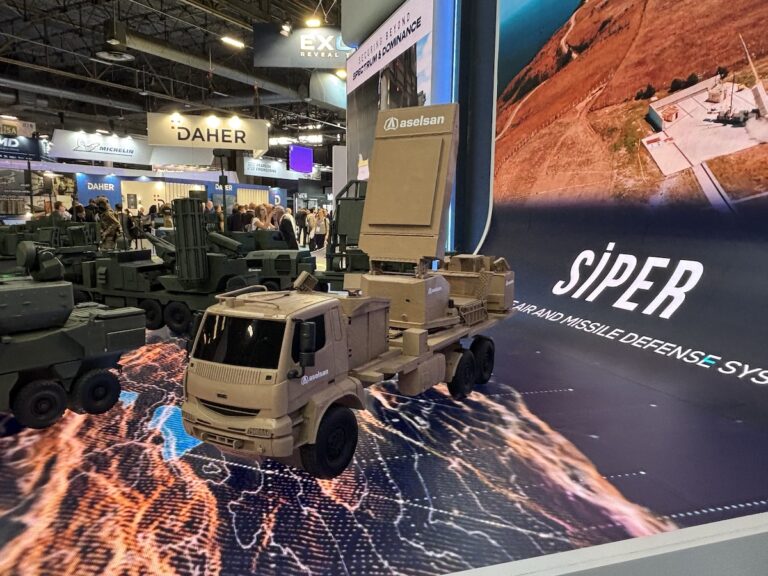
“All of this is a result of the importance of missile defense as demonstrated in the recent conflicts for cruise missiles and drones, both detection and interception,” Warden said. She identified Northrop Grumman’s Integrated Battle Command System, or IBCS, as designed specifically for the short- and medium-range integrated air and missile defense mission.
Northrop Grumman announced an order for six IBCS systems for Kuwait during the quarter, while the United Arab Emirates and Qatar have submitted letters of request for the system. Warden said the company was also in discussions with multiple other Middle Eastern countries, indicating that the regional opportunity extends beyond the deals already disclosed.
The company is also seeing an improvement in the U.S. Foreign Military Sales process that governs many such exports. Warden said FMS cases were being approved “at a much more rapid rate” and were progressing significantly faster than Northrop Grumman had experienced in previous years.
While IBCS gives Northrop Grumman exposure to the command-and-control layer of missile defense, the company is also expanding deeper into the interceptor supply chain. Warden said Northrop Grumman completed qualification activities during the second quarter to become a solid rocket motor supplier for PAC-3 and already had manufacturing capacity in place.
“We have production capacity, and we are starting to build,” Warden said. Northrop Grumman was beginning production even before the expected definitization of a contract later in 2026, she said, allowing the company to respond more quickly to increased demand.
Northrop Grumman has reached a $2 billion framework agreement with the U.S. government and Lockheed Martin related to PAC-3 solid rocket motors and expects a production award later this year. The company is entering the program as a new supplier, however, and Warden said its initial share would be relatively small before potentially expanding over time.
“At first, because we are a brand-new supplier, we will start at a smaller scale, and that will grow over time,” Warden said. She added that successful early deliveries would give Northrop Grumman the credibility needed to increase its position on the program.
PAC-3 forms part of a wider push by Northrop Grumman to expand missile production capacity. Warden said the company has 10 multi-year agreements for missile acceleration in progress across its portfolio, representing as much as $10 billion in potential sales over seven years.
Those agreements are giving industry clearer visibility into future demand, according to Warden, while allowing Northrop Grumman to make manufacturing investments before every contract is finalized. She said the company had already invested in capacity in a number of areas and was working with government and prime-contractor customers on pricing, fees and the recovery of those investments as contracts are definitized.
The next layer of the company’s missile defense strategy is Golden Dome, the emerging U.S. homeland defense architecture. Warden described it as “a collection of programs that create our homeland missile defense architecture,” involving both competitive procurements and sole-source additions to contracts Northrop Grumman already holds.
Funding began moving onto contracts during the second quarter after a slower start to the year, she said. Northrop Grumman expects additional selection decisions and contract actions through the rest of 2026 and into early 2027, with revenue from Golden Dome-related work continuing to increase.
Warden also cited Northrop Grumman’s Golden Dome offerings when discussing returns from investments the company has made in new capabilities over recent years. Those investments, together with spending on production capacity, are beginning to position the company for stronger revenue growth, she said.
Missile defense is also becoming more closely tied to Northrop Grumman’s national security space business. Warden said space resilience, intelligence, surveillance and reconnaissance, and missile defense collectively represent one of the strongest areas of U.S. budget growth and one of the company’s strongest projected growth markets.
Northrop Grumman’s national security space backlog stood at more than $16 billion, including programs such as GPI, GWS and restricted efforts. The company expects the business to generate more than $7 billion in sales in 2026, representing more than 15% of total company revenue, with missile defense among the areas supporting that growth.
“Modern warfare is driving demand in this market, with every service now depending on space-based capabilities,” Warden said. She said that reliance was contributing to historically higher U.S. space budgets and supporting demand across space security, resilience and missile defense.
The increase in missile defense activity is already feeding into Northrop Grumman’s financial results. Chief Financial Officer John Greene said Defense Systems sales rose 5% in the second quarter, or 7% on an organic basis, with higher revenue driven by the continued ramp of Sentinel and missile defense programs.
Northrop Grumman’s approach is increasingly centered on having industrial capacity available before demand fully converts into firm orders. Warden said investments in capacity had positioned the company to pursue work it otherwise might not have been able to deliver and, in cases such as PAC-3, to begin production without waiting for the entire contracting process to be completed.
Taken together, the comments show missile defense developing into a broader business platform for Northrop Grumman rather than a single-program opportunity. IBCS is opening international markets, PAC-3 is extending the company’s role in interceptor production, Golden Dome is creating new homeland defense opportunities and national security space is adding another layer to a portfolio that management increasingly sees as a source of long-term growth.