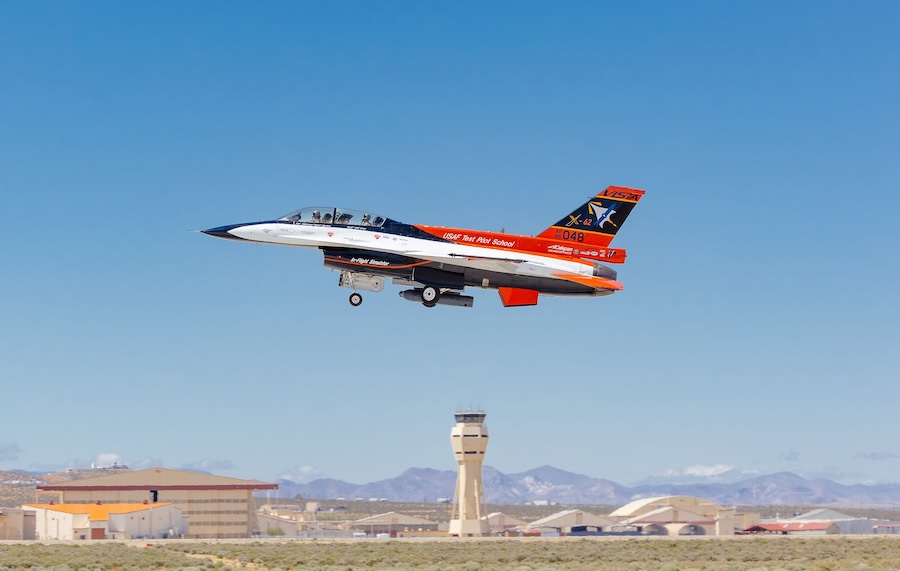
The X-62 Variable In-flight Simulation Test Aircraft carried Lockheed Martin’s Legion Pod. The sensor tracked the target and sent secure data to an AI agent controlling the aircraft.
The AI agent used the sensor feed to maneuver the X-62 into a tactical intercept position. The test linked target detection, autonomous decision-making and aircraft control in real time.
The campaign validated the process from development and simulation through training and flight execution. Lockheed Martin completed AI-agent integration and ground testing within three months.
“Our ongoing partnership with TPS is driving important progress with this latest flight test series demonstrating that our AI can effectively and reliably close the sensor to action loop aboard an operational combat aircraft,” said Ron Fehlen, vice president and general manager, Lockheed Martin Skunk Works. “Our autonomous agents consumed classified infrared search and track feeds and executed combat critical maneuvers in real time.”
“This achievement marks a decisive advance toward delivering AI augmented air dominance for the United States,” Fehlen said. The tests also expanded the Test Pilot School’s work with onboard AI and autonomy.
“Our ability to provide reliable sensor data is critical, but the real advantage comes when that data can connect seamlessly with AI to take action,” said Stacy Kubicek, vice president and general manager, Lockheed Martin Sensors and Global Sustainment. “This project demonstrates how sensing and autonomous AI can come together as a force multiplier to make faster, more informed action in complex environments.”
Lockheed Martin said AI could assume complex tasks and give pilots more time to assess tactical information. The company linked that approach to improved pilot effectiveness and survivability.
Skunk Works has supported the X-62 for decades through open software and hardware architectures. A planned mission-systems upgrade will integrate sensors, combat systems and airborne AI agents within a next-generation mesh network.