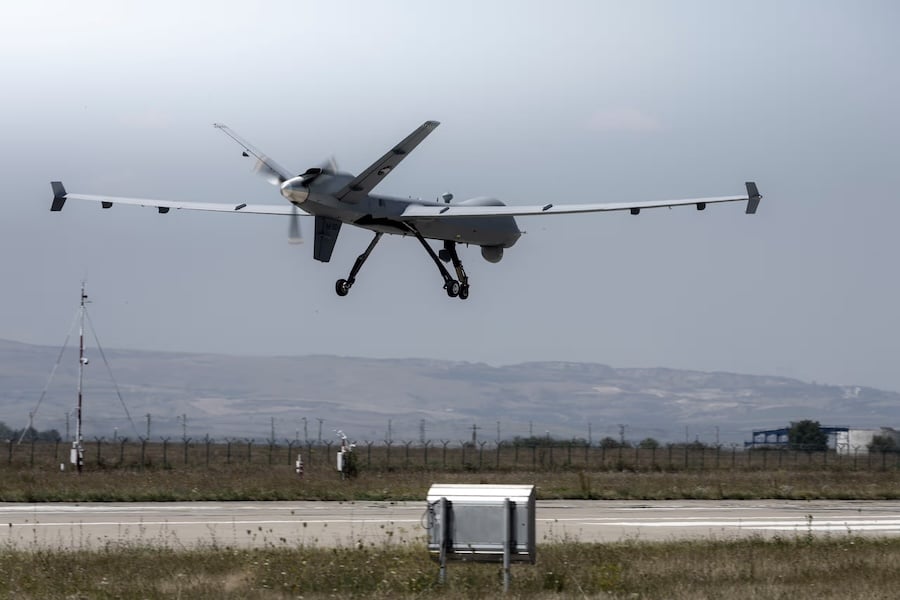
The unmanned aircraft are deployed for Air Shielding operations, collecting data and information from the air. Their sensors contribute to the situational picture used to monitor developments across the alliance’s eastern region.
The MQ-9s form part of the broader intelligence, surveillance and reconnaissance capability assigned to NATO’s eastern flank. The Netherlands said its contribution would gain importance as US participation in that activity comes to an end.
While the deployment directly supports NATO, the aircraft will continue to operate under Dutch national responsibility. The alliance communicates its intelligence requirements to the Netherlands, but Dutch authorities decide which missions are conducted and how they are carried out.
The Netherlands will also retain responsibility for processing the information collected by the Reapers. The arrangement allows the country to support NATO’s surveillance requirements while maintaining national control over the aircraft’s tasking and intelligence activities.
The extended mission reinforces the Netherlands’ role in providing persistent airborne surveillance for NATO at a time of heightened focus on the alliance’s eastern defences. The Ministry of Defence did not disclose the number of aircraft or personnel assigned to the deployment.