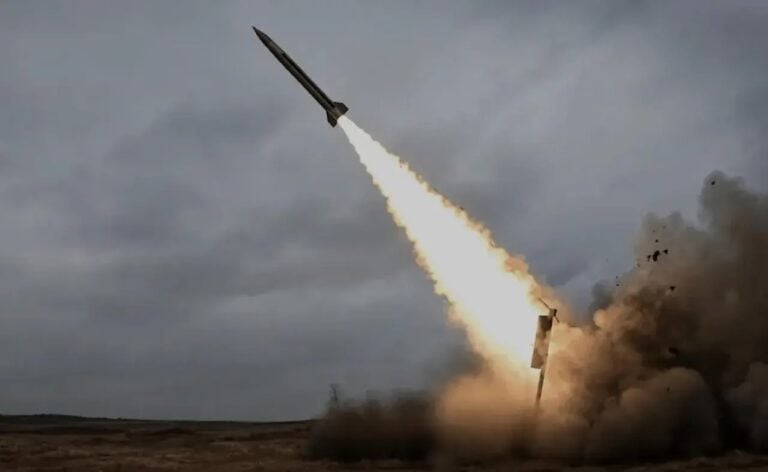


Coyote missiles are paired with Raytheon’s Ku-band Radio Frequency Sensor for the Army counter-UAS program. The system is designed to provide detect-and-defeat capability against drones, according to the company website cited in the article.
The system has been deployed as part of Operation Epic Fury against Iran. Last week, the U.S. Army approved disclosure of 600 combat intercepts since deployment.
Tom Laliberty, Raytheon’s president of land and air defense systems, said integrated air and missile defense is one of the most immediate issues in the military sector. He said the company is focused on scaling production of Coyote as demand for counter-drone systems rises.
“The system is now in wide use, and it has been significantly successful combating Class 1 through 3 drones,” Laliberty said during a media briefing on the sidelines of the Farnborough International Airshow. “We’ve scaled production [times three] over the last year, and we plan to double it again by the end of next year, so by the end of all that time, we’ll be producing about 300 of these missiles a month.”
Raytheon has two Coyote variants that can be used interchangeably. Laliberty said Coyote Block 2 uses a kinetic warhead to defeat drones, while Coyote Block 3NK is a reusable, rechargeable platform that uses a high-power microwave module to counter swarms.
He said layered air defense is becoming more important as conflicts continue around the world. That approach is meant to help forces respond to attacks that combine expensive munitions with lower-cost systems.
“If you’re following what’s going on in the Middle East and what’s going on in the war between Ukraine and Russia, you see this situation where you have very large, well-coordinated attacks from 360 degrees,” Laliberty said, referring to attacks made up of both high-cost munitions and low-cost systems. “You’ve got that pressure, and you’ve got to be able to do it at scale, because you obviously also have a large number of defended assets, and the adversary will pick and choose what they attack based on their knowledge of where you might or might not be well defended.”
Laliberty said the main challenge for layered air defense is coordinating specific actions against different types of threats. He said that requires strong command and control across the different layers of a defensive network.
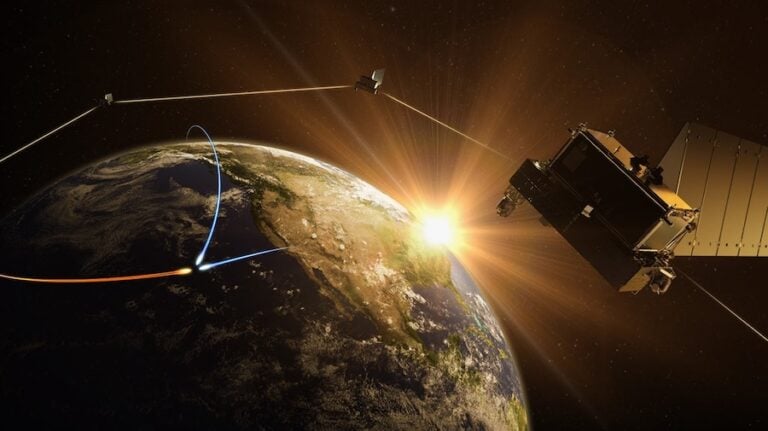
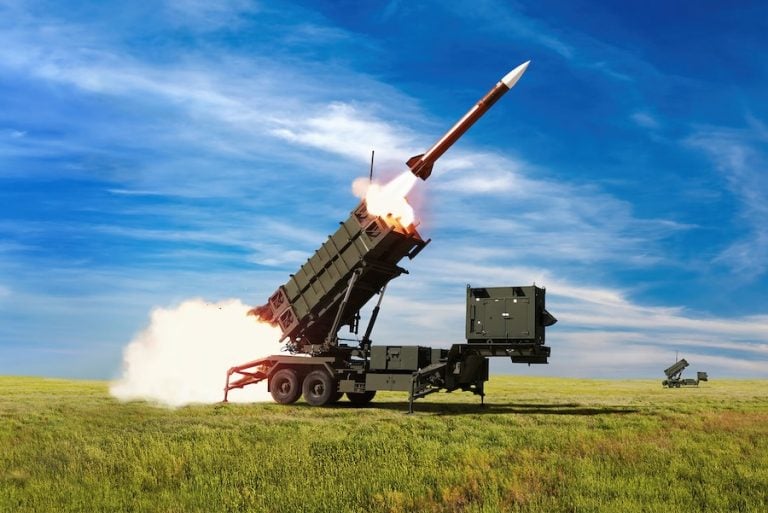
“As you bring these lower-cost technologies together, the other thing that’s really important is the ability to have command and control that spans these layers so that you do the appropriate target or threat to weapon assignment,” he said. “You want to make sure that your systems interoperate with each other, such that you select a Coyote interceptor to shoot down a Shahed $40,000 drone and not a Patriot missile. So, that integration is super important as well.”
The comments place Coyote inside a wider debate over cost, scale and weapon-to-target matching in modern air defense. For Raytheon, the production push reflects the growing role of counter-UAS interceptors in defending forces and assets against large, coordinated drone attacks.
Source: National Defense Magazine.