
The test took place at Rheinmetall’s Bremen site in June 2026. The BAAINBw project manager formally confirmed the result in July.
Bundeswehr procurement and army development officials inspected the equipment. Fusilier troops and Infantry School personnel also participated.
The training programme began after the contract was signed in early 2024. Development was completed in July 2026.
Rheinmetall worked with the Infantry School and the Army Concepts and Capabilities Development Centre during the design phase. Their input allowed future user requirements to be included early.
Procedural trainers were delivered to fusilier battalions between September 2025 and April 2026. The first Heavy Infantry Weapon Carrier is scheduled to reach the Infantry School in autumn 2026.
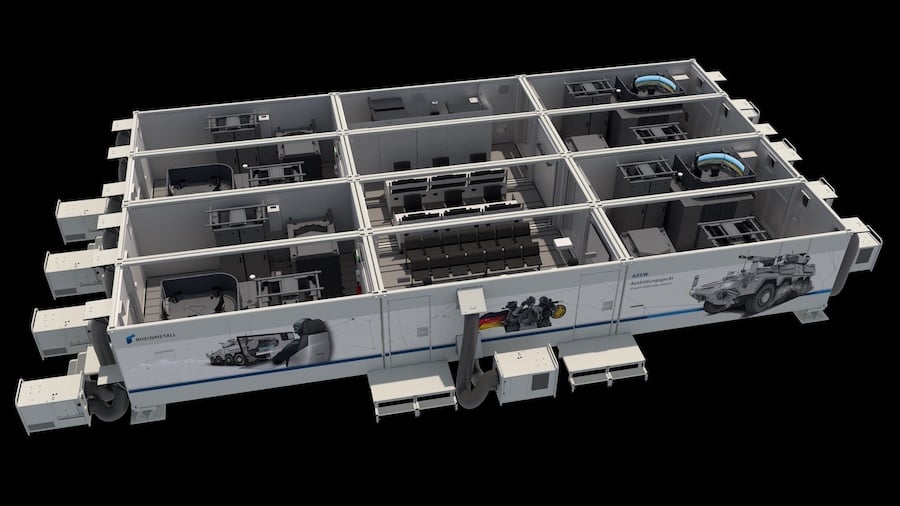
The main simulator is known by its German abbreviation, AGSW. It includes a control, evaluation and monitoring station and four fighting compartments.
The system replicates the vehicle interior, operating logic and aiming behaviour. It also simulates driving dynamics and ballistics.
Training ranges from individual crew instruction to full-crew coordination. It also covers tactical procedures and platoon-level scenarios.
The simulators can connect with infantry desktop trainers. This allows vehicle crews and dismounted infantry to train together.
Both systems use the same simulation software and operating logic. Users can also create virtual terrain based on potential operational areas.
The terrain tools allow crews to rehearse routes, positions and tactical procedures. This work can be completed before a potential deployment.
The AGSW is based on Rheinmetall’s Puma infantry fighting vehicle training system. The Puma system entered serial production after reaching a major milestone in 2025.
Five AGSW systems are due to be delivered by mid-2027. Their software will later be updated to match the Heavy Infantry Weapon Carrier’s final development standard.