Northrop Grumman is using computerized engineering environments at its Roy Innovation Center in Utah to increase the speed and efficiency of developing new ICBM capabilities. At nearby Promontory, the program is progressing with a standardized launch-silo prototype, manufacturing work for missile cases and facilities dedicated to booster integration.
Modernization planning also covers the transition from the existing Minuteman III force, including development of a Minuteman missile transporter erector and potential use of the Air Force Repair and Enhancement Program. Air Force Global Strike Command’s Detachment 13 is providing operational input from missile operators and maintainers to help shape the future system.
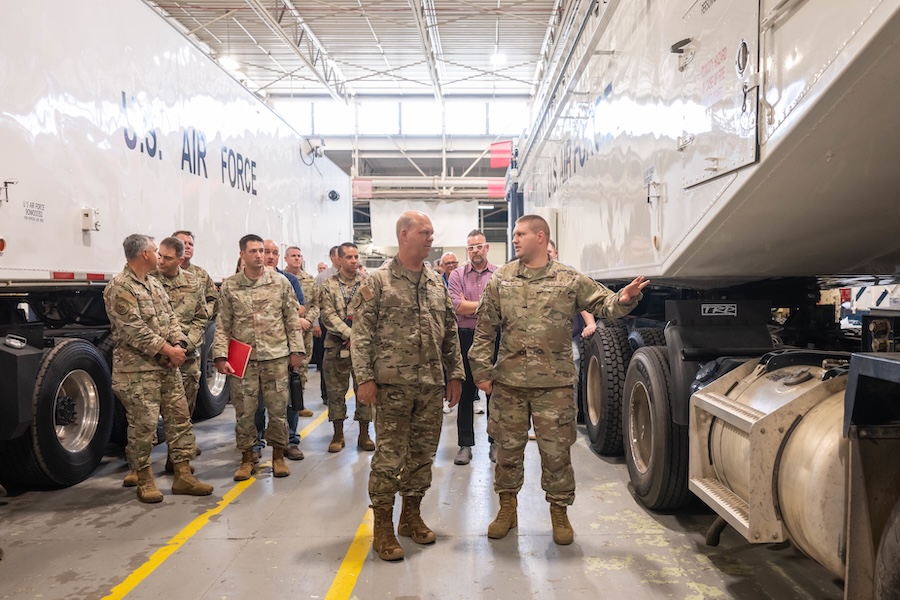
Gen. S.L. Davis, commander of Air Force Global Strike Command, said Sentinel would “significantly improve the effectiveness of America’s ICBM force,” allowing the country to deter any aggressor. “It was good to see the progress on Sentinel firsthand,” Davis said.
“Sentinel is not simply an upgrade to our ICBM mission; it’s a necessary leap forward that improves our capabilities while also improving safety and security. The dedication of our Airmen and industry partners is what will make this critical modernization effort possible.”
Chief Master Sgt. Shawn M. Aiello, Air Force Global Strike Command’s command chief, said personnel would be able to carry their existing expertise into the new system. “Sentinel is an evolutionary step in our ICBM capabilities,” Aiello said.
“Our maintainers, defenders, command post controllers, our weather Airmen, airfield operations … our Airmen are going to see a newer version of our ground based strategic capability in Sentinel. It’s great to see the progress made in the last two years with our partnerships.”
“In the coming years, Airmen will start seeing pieces and parts of this that will make it very real,” Aiello added. The Air Force expects the system to support a more effective, safe and secure ICBM force well into the 2070s.
Davis described Sentinel as a wider national-defense project rather than solely a replacement missile. “What we’re building here is more than just a new missile; we are building the future of national defense. The work being done here in Utah is at the very heart of that effort.”
The program forms a central part of the Air Force’s long-term modernization of U.S. land-based nuclear forces. According to the service, Sentinel also supports the Department of War’s policy of delivering peace through strength.