
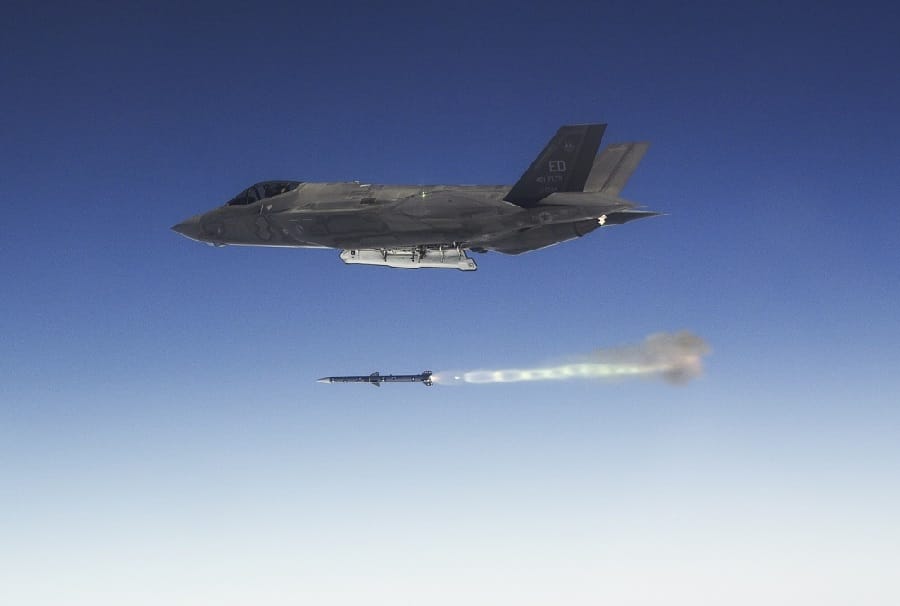
The initiative lays the foundation for a future multiyear procurement of the next-generation air-to-air missile. Such an arrangement would provide Lockheed Martin and its suppliers with clearer demand forecasts for investments in factories, workers and production efficiency.
“Speed, scale, and stability drive acquisition excellence, and these gears must turn in unison,” said Michael P. Duffey, under secretary of war for acquisition and sustainment. “Today’s announcement reflects our commitment to sending clear, long-term demand signals across the defense industrial base, ensuring our Warfighters receive unmatched capability exactly when and where the mission demands.”
The department said the framework would execute congressional authority covering the nation’s highest-priority missile systems. Its focus is on creating a more stable production base capable of delivering weapons in greater numbers over an extended period.
The planned procurement structure also supports the department’s effort to increase foreign military sales of the AIM-260. Higher production capacity would allow the United States to address its own operational demand while supplying approved international customers.
The initiative is a direct element of the Department of War’s Acquisition Transformation Strategy. It also supports the Arsenal of Freedom agenda advanced by President Donald Trump and Secretary of War Pete Hegseth.
The Office of the Under Secretary of War for Acquisition and Sustainment worked with the Munitions Acceleration Council and the Economic Defense Unit on the framework. The U.S. Air Force and U.S. Navy also participated in the effort.