The British defence group secured £16.4 billion of new orders during the period. Its order backlog reached a record £84 billion at the end of June.
Underlying earnings per share increased 13% to 38.9 pence. Return on sales improved to 10.8% from 10.6% a year earlier.
Free cash flow reached £1.79 billion, compared with a £368 million outflow in 2025. BAE Systems attributed the increase to a high level of customer advances.
On an IFRS basis, revenue rose 8% to £14.62 billion. Operating profit increased 13% to £1.50 billion, while the interim dividend rose 11% to 15 pence.
“Across the business, our outstanding teams have delivered another strong period of operational and financial performance, which gives us the confidence to upgrade our full year guidance,” Chief Executive Charles Woodburn said. The company did not provide revised guidance ranges in the statement.
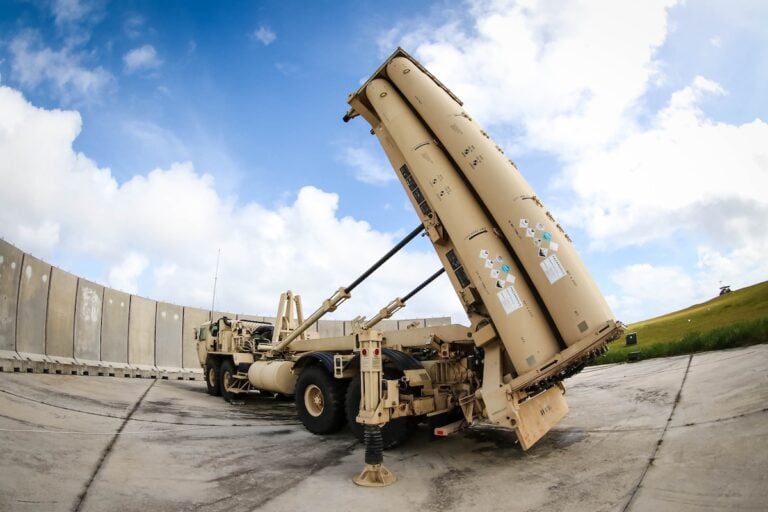
U.S. defence programmes featured heavily in the group’s first-half order activity. BAE Systems signed a seven-year framework agreement to quadruple production of infrared seekers for THAAD interceptor missiles.
The company also received a $535 million award for additional M109A7 Paladin self-propelled howitzer sets. The order builds on multi-year U.S. Army contracts awarded in 2025.
BAE Systems completed the preliminary design review for the $1.2 billion Epoch 2 missile-warning satellite programme. The U.S. Space Force provided another $373 million of funding during the first half.
The group completed a 150,000-square-foot expansion of its Endicott facility in New York. It also announced a further $135 million investment in Texas and New Hampshire to expand precision-guided munitions capacity.
A new facility in Utah will support U.S. intercontinental ballistic missile sustainment and modernisation. The site will accommodate engineering, digital transformation and mission operations teams.
“Alongside our focus on meeting our customers’ needs today, we continue to invest in our business to accelerate innovation, drive efficiencies and boost capacity, so we can get mission-critical capabilities into the hands of those who need them, faster,” Woodburn said. “Examples include our new collaborative combat aircraft, designed to enable our customers to deploy a combined future force of crewed and uncrewed fighter jets, and investment in our facilities in Texas and New Hampshire to support the US Government’s ambition to quadruple production of critical munitions.”
In Britain, BAE Systems secured a £5.9 billion contract for the Dreadnought-class nuclear deterrent submarine programme. Edgewing also won Global Combat Air Programme contracts worth more than £5 billion.
The company unveiled Brontanax at the Farnborough International Airshow in July. BAE Systems described it as the UK’s first uncrewed autonomous Collaborative Combat Aircraft.
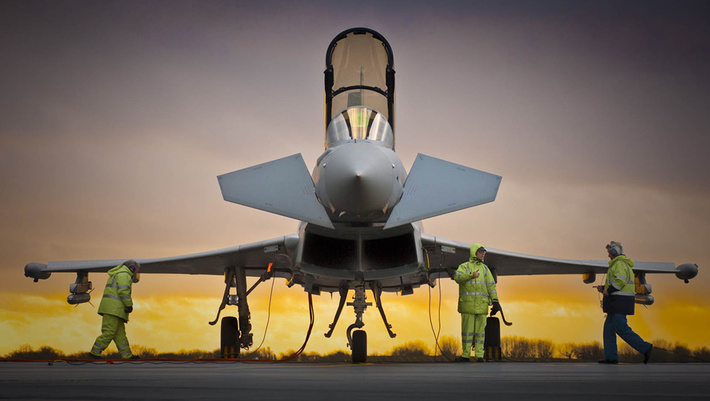
BAE Systems also completed an APKWS precision weapon test firing from a Eurofighter Typhoon. The system moved from testing to Royal Air Force deployment in the Middle East in under two months.
A separate UK contract covers training, support equipment and services for Türkiye’s 20 Eurofighter Typhoon aircraft. Manufacturing has started, with first delivery scheduled for 2030.
The group secured contracts worth more than $200 million for ARCHER artillery systems and $180 million for TRIDON Mk2 systems. Both are produced by its Bofors business in Sweden.
BAE Systems remains on track to invest more than $300 million over five years at its Hägglunds facility. The programme will expand combat vehicle production capacity in Sweden.
The company also continued work on its drone and counter-drone portfolio. The British Army and Royal Navy trialled the Nyan one-way effector, with tests of another counter-drone system planned for August.
“The global threat picture remains highly volatile and governments are responding with sustained increases in their defence budgets,” Woodburn said. “The combination of our proven execution, diverse geographic footprint and continued investment in our technology and facilities, alongside our healthy order backlog and growing opportunities across our markets, positions us to keep delivering long-term growth.”