The agreement sets the scope for detailed negotiations on aircraft configuration, industrial participation, programme schedules and execution. It does not constitute a contract or commit Canada to buying the aircraft.
Saab was named Canada’s preferred supplier for the future capability on 27 May 2026. The term sheet follows months of discussions involving the company, Canada’s Defence Investment Agency and the Royal Canadian Air Force.
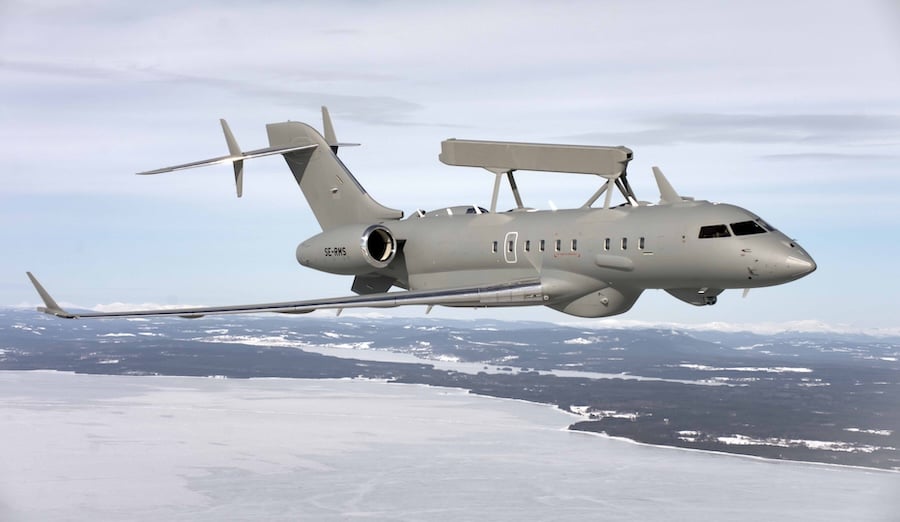
Built on the Canadian-manufactured Bombardier Global 6500 platform, GlobalEye combines active and passive sensors with airborne command-and-control systems. Canada said the aircraft would detect, track and prioritise threats at long range, including aircraft, missiles and drones.
The fleet would provide commanders with real-time information and a broader operational picture across Canadian territory and its approaches. It would also extend the RCAF’s reach in the Arctic and other remote regions.
“An Airborne Early Warning and Control capability will significantly strengthen Canada’s ability to detect, track, and respond to threats to our territory and approaches,” said Lieutenant-General Jamie Speiser-Blanchet, commander of the Royal Canadian Air Force. “It will be a key enabler of integration across our modernized force, connecting platforms, sensors, and decision-makers to provide a more complete operational picture and improve our ability to act with speed and confidence.”
Canada wants to establish the country as a centre for future GlobalEye missionisation and support work, building on domestic production of the Global 6500. The plan is intended to generate skilled employment, integrate Canadian technology, expand local supply-chain participation and create potential export opportunities.
The government is negotiating industrial benefits with Saab under Canada’s Industrial and Technological Benefits Policy. Potential areas include in-service support, training, research and development, mission integration and future exports of Canadian-built GlobalEye aircraft.
The project also forms part of Canada’s Defence Industrial Strategy and its Build-Partner-Buy procurement framework. The policy prioritises proven systems from trusted allies while seeking domestic industrial capacity and long-term economic benefits.
“Entering into this agreement is an important and tangible step forward in our ongoing efforts to equip the Royal Canadian Air Force with the modern capabilities it needs to support operations,” Defence Minister David McGuinty said. “By engaging early with industry we can tap into their expertise, innovation, and experience, while supporting key pillars of the Defence Industrial Strategy.”
Saab said the agreement provides a defined basis for the next phase of negotiations. “With a well-defined scope in place, we are well positioned to continue discussions and demonstrate how Saab’s proven and highly capable AEW&C solution can meet Canada’s requirements,” Saab Chief Executive Micael Johansson said.
Canada said GlobalEye has been selected, or is intended to be selected, by NATO, Sweden, France, the Netherlands and the United Arab Emirates. Further negotiations will be required before Canada makes a binding procurement decision.