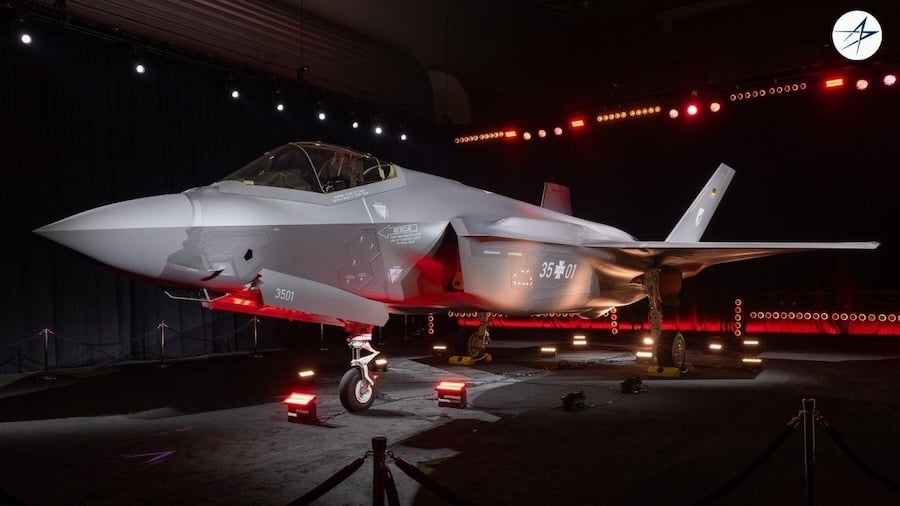
Berlin plans to acquire 35 F-35As for €10 billion, with deliveries scheduled for completion by 2029. The aircraft will support Germany’s participation in NATO’s nuclear-sharing arrangements and expand its ability to operate with other allies.
German Defense Minister Boris Pistorius described the delivery as the start of a new era for the German Air Force. He pointed to the F-35A’s low-observable design, sensor suite and digital connectivity as central elements of the new capability.
“The F-35A is able to collect large volumes of data and rapidly combine them to create a comprehensive picture of the situation,” Pistorius said at the Air and Space Forces Association. Referring to cooperation with other F-35 operators, he said it “makes us stronger together.”
“From our AIRCOM perspective Germany’s decision to acquire the F-35A represents a significant investment in NATO interoperability and Allied Airpower,” said German Maj. Gen. Frank Gräfe, chief of staff of NATO Allied Air Command. “As more Allies operate the F-35, we are strengthening our ability to train, operate and fight together as a cohesive Alliance.”
The acquisition gives Germany access to a growing group of allied F-35 operators that can train and conduct missions using a common aircraft. Its ability to share information and integrate with other platforms is expected to support multinational operations and collective training.
German industry also has a role in the aircraft’s production, including work involving Rheinmetall. That participation links the procurement to Germany’s domestic defense sector while the new fleet is introduced into military service.
The F-35A program forms part of Germany’s wider effort to modernize its armed forces following Russia’s war against Ukraine. For NATO, the aircraft will add another allied fleet able to contribute to readiness, interoperability and deterrence across the Euro-Atlantic region.