“We will be investing in that acceleration capacity over the next couple of years and then expect to see the translation into higher volume later in the decade,” Warden told analysts on October 20. She said sustainment and modernization work would also contribute to the program’s growth.
Chief Financial Officer John Greene said Northrop expects companywide capital expenditures of approximately $2.1 billion in 2027, equivalent to about 4.5% of sales. That spending includes the capacity needed to support a higher B-21 production rate.
The company expects stronger operating performance, working capital management and tax optimization to offset the additional capital spending associated with B-21 acceleration. It maintained its forecast for adjusted free cash flow of $3.3 billion to $3.7 billion in 2027.
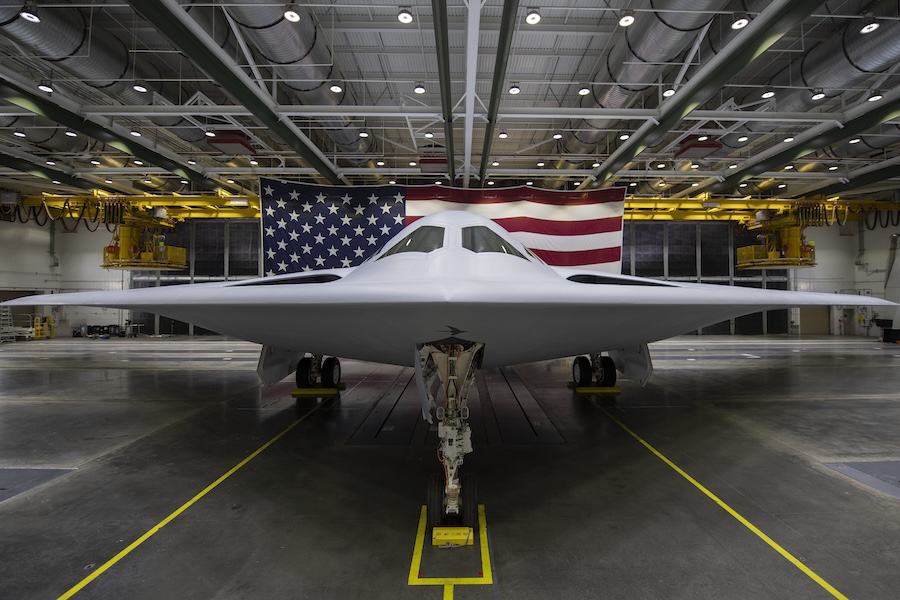
Warden said B-21 testing and production would increase in 2027 while the company invests in the longer-term expansion. Work on supporting and upgrading the aircraft is also developing alongside manufacturing.
“We have sustainment starting to come into the program,” Warden said. “We also have modernization that is ongoing in the program.”
Asked whether Northrop faced further charges on its fixed-price, low-rate initial production contracts, Warden said the aircraft was meeting key performance parameters during testing. Successful tests were reducing the risk of discovering problems late in development, she said, while manufacturing experience was improving production performance.
“The program is performing very well,” Warden said. She nevertheless acknowledged that risk remained while Northrop completes its outstanding low-rate initial production aircraft.
Greene said the continued B-21 production ramp contributed to higher sales in Northrop’s strike aircraft portfolio during the third quarter. He expects the bomber to support further growth in the Aeronautics Systems business in 2027, although its increasing share of sales will put some pressure on the division’s operating margin.