The deal was signed at the Army Palace in the Italian capital during a ceremony attended by Portugal’s Minister of National Defence, Nuno Melo, and the Chief of Staff of the Navy, Admiral Jorge Nobre de Sousa. Rear Admiral Antonio Mateus, Portugal’s Deputy Director-General of Armament, signed the document.
The agreement opens the way for a production contract between OCCAR, acting as managing and contracting authority, and the industrial team of Fincantieri and Leonardo. It covers three new-generation frigates, maintenance, technology transfer and the conditions needed to operate the ships over a life cycle of at least 30 years.
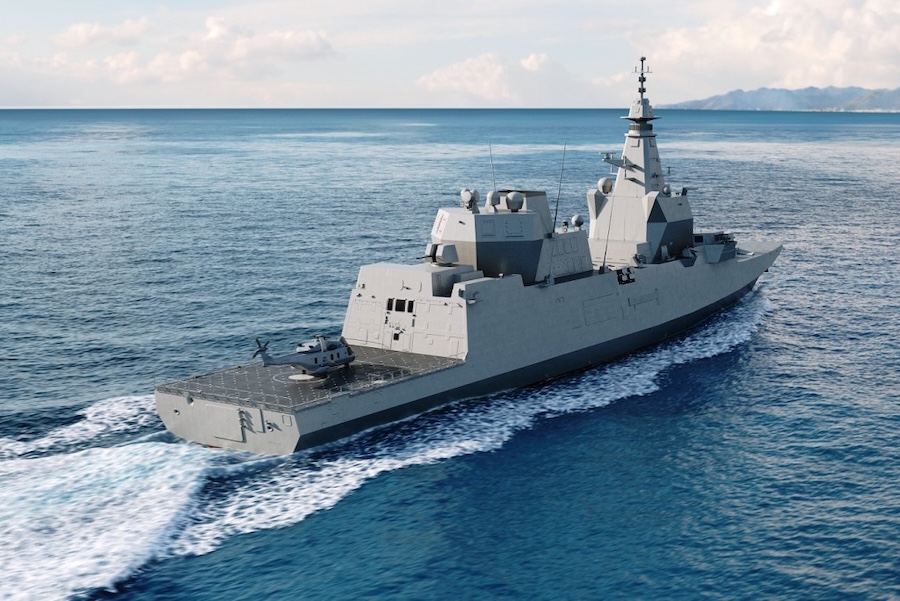
Portugal is set to become the first export customer for the FREMM EVO design. Italy has already ordered two FREMM EVO frigates for the Marina Militare, under a contract signed in July 2024.
The Portuguese acquisition is valued at €3.9 billion and forms a significant part of the country’s €5.8 billion SAFE investment. Deliveries to the Portuguese Navy are planned between 2029 and 2030.
The timing and funding route indicate that Portugal is expected to receive units previously ordered by Italy. The arrangement would allow Lisbon to accelerate fleet renewal while supporting a wider European defence procurement framework.
The frigates are part of a broader modernisation effort for the Portuguese Navy and Armed Forces. Portugal says the programme is intended to adapt its forces to a changed geopolitical environment and new threats.
The new ships are expected to support missions in Portuguese waters, international defence and collective security commitments, and permanent support to the population. The investment focuses on surface ocean warfare and anti-submarine warfare.
Portugal currently operates five missile frigates. Three are Vasco da Gama-class ships based on the MEKO 200 design, while two are Bartolomeu Dias-class vessels based on the Karel Doorman design.
Both classes entered service from designs dating to the first half of the 1990s. Although they have been modernised over time, they are gradually falling behind the latest standards for ships of this type.
The agreement also carries an industrial component for Portugal. It foresees cooperation with defence companies, strong involvement of national firms, technology transfer, revitalisation of the Alfeite Arsenal and a significant return for the national economy.
The SAFE investment is described by Portugal as the largest re-equipment effort for the Armed Forces in the country’s democratic era. It spans naval, land, air, drone and space domains, linking the frigate procurement to a wider push for military renewal and industrial resilience.