
The figures appear in Operation Epic Fury: Report to the United States Congress, April 1, 2026–June 30, 2026, the first quarterly oversight assessment of the campaign against Iran. The aircraft table draws on a Congressional Research Service assessment and subsequent vetting by U.S. Central Command.
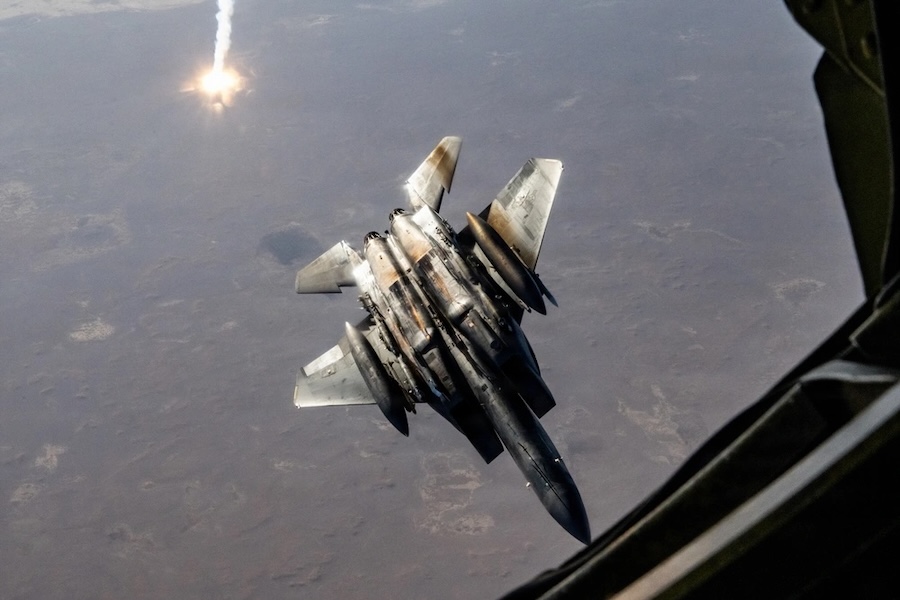
Four F-15Es were destroyed during the operation, including three lost to friendly fire and one to enemy fire. The report did not identify the weapons involved or provide further details about the missions in which the aircraft were lost.
An F-35A was damaged by enemy fire while operating over Iran. The document did not disclose the severity of the damage, the weapon responsible or whether the stealth fighter later returned to service.
The aerial refueling fleet also sustained significant losses. Seven KC-135 tankers were damaged or destroyed in incidents over Iraq and on the ground in Saudi Arabia.
One KC-135 was destroyed and another damaged in a collision over Iraq. Five more were damaged or destroyed by Iranian munitions while parked in Saudi Arabia, according to the report.
Iranian strikes in Saudi Arabia also damaged an E-3 airborne warning and control aircraft on the ground. The loss data highlight the exposure of high-value support aircraft operating from regional bases during the campaign.
Uncrewed aircraft accounted for the largest share of reported losses. As many as 30 MQ-9 intelligence, surveillance and reconnaissance aircraft were destroyed in various circumstances, while one MQ-4C high-altitude, long-endurance aircraft was reported to have crashed.
The report also listed the loss of an A-10 attack aircraft, which was jettisoned after sustaining damage while returning from a combat search-and-rescue mission. An HH-60W helicopter was damaged during combat search-and-rescue operations.
Four AH-6 helicopters were destroyed by U.S. forces after they became impossible to recover during combat search-and-rescue missions. An AH-64 attack helicopter was shot down over the Strait of Hormuz, while an MH-60 helicopter crashed over the Arabian Sea.
The aircraft toll came during a campaign in which U.S. forces flew approximately 36,000 combat sorties and conducted more than 1,800 fire missions. About 13,500 targets were struck between February 28 and April 7, including Iranian missile units, air defense sites, command centers, naval assets and weapons-storage facilities.
Iranian attacks also damaged or destroyed hundreds of buildings and other structures at U.S. bases in Kuwait, Bahrain, Qatar, the United Arab Emirates, Saudi Arabia, Iraq, Oman and Jordan. Central Command responded by dispersing personnel, aircraft, storage facilities and air defense systems as the threat evolved.
More than 50,000 U.S. service members deployed across the Central Command region in support of the operation. At its height, the force included more than a dozen fighter squadrons, more than a dozen destroyers and more than a dozen air defense batteries.
The Pentagon valued equipment losses at $3.7 billion, using estimated replacement costs. The figure formed part of a broader $33.4 billion estimate for the operation, which also included $22.3 billion for expended munitions and $7.4 billion in incremental obligations.
The Inspector General said most operational information collected from federal agencies had not been independently verified or audited. The aircraft-loss figures therefore reflect the assessments cited in the report, including data from the Congressional Research Service and U.S. Central Command.