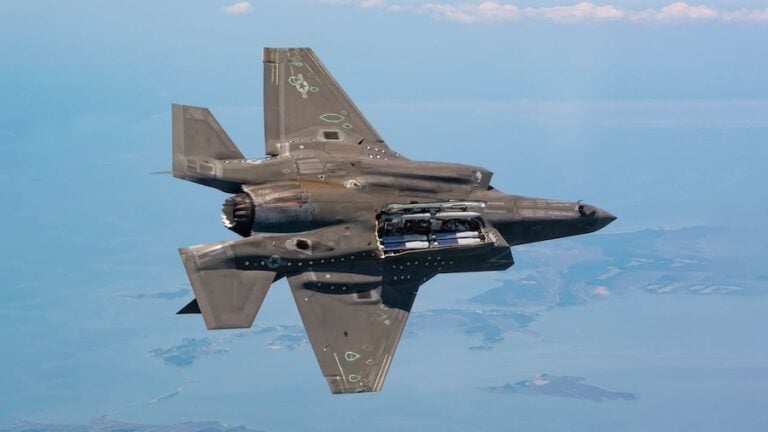
The operation moved 3d Marine Aircraft Wing personnel and aircraft from Royal Australian Air Force Base Tindal through Cairns, Pohnpei, Kwajalein Atoll and Wake Island before reaching Hawaii. Marines using MV-22B Ospreys and other wing assets secured locations along the route.
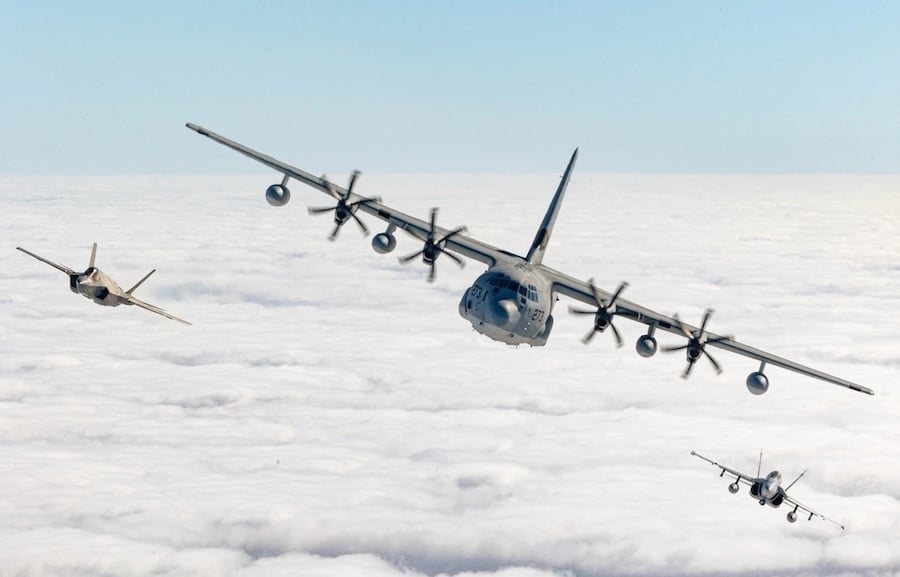
The KC-130J operated as a self-contained logistics node during the movement. It carried Marines, maintenance equipment, fuel and other supplies ahead of the F-35Bs, allowing the fighters to advance deeper into the region.
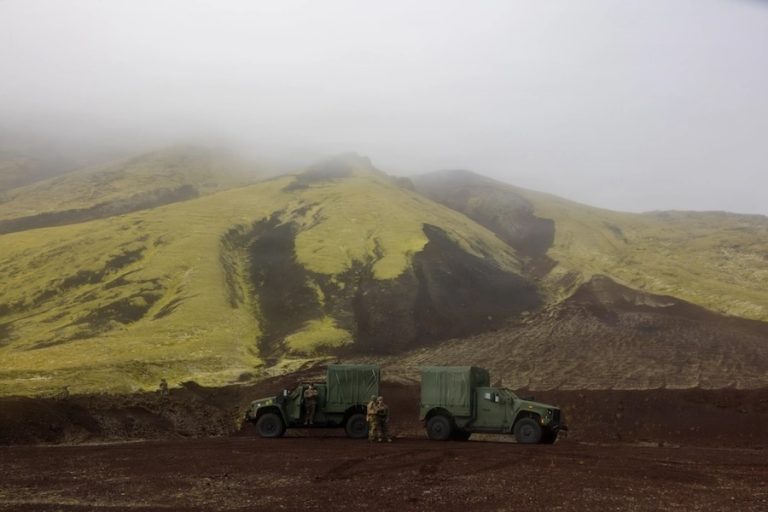
The aircraft landed at remote and undeveloped airfields to establish aviation-delivered ground refueling and rearming points. This approach gave 3d MAW a way to sustain fighter operations across the Indo-Pacific’s widely dispersed islands and limited infrastructure.
“While the jets are focused on the tactical fight, the KC-130J is the workhorse in the background, carrying the maintainers, the maintenance equipment, and the fuel required to dramatically extend the range and lethality of those jets,” said 1st Lt. Christian Schwien, a KC-130J co-pilot. The aircraft provided the personnel and materiel needed to keep the F-35Bs operating along the route.
Using the KC-130J as a forward logistics hub required close coordination across the crew. Pilots conducted long-range overwater navigation and landed the 135,000-pound aircraft on austere airstrips, while loadmasters managed weight, balance and ground-refueling operations.
Operation Slingshot applied an island-hopping concept to modern Marine aviation. The approach combined the KC-130J’s transport and refueling roles with the F-35B’s ability to operate from expeditionary locations.
The demonstration drew on the C-130 family’s history of supporting forces in contested environments. During the 1968 siege of Khe Sanh, C-130s delivered more than 12,000 tons of supplies after overland routes to the surrounded 26th Marines were severed.
Marine KC-130 aircraft later refueled strike packages operating deep into the northern Persian Gulf during Operation Desert Storm in 1991. The KC-130J retains that transport role while adding aerial-refueling and broader multi-mission capabilities.
For 3d MAW, the platform provides a means to distribute fuel, personnel and maintenance support across long distances. Operation Slingshot showed how that capability can sustain F-35B operations across the Indo-Pacific while reducing dependence on established bases and external tanker support.