The decision creates a new military aircraft procurement requirement, but the government has not selected a platform or named potential suppliers. The Defence Investment Plan also leaves the fleet size and acquisition structure open.
The new system will support both sovereign British requirements and international military training. The government has promised significant UK workshare, placing domestic industrial participation at the centre of the future competition.
Spending will begin during the four financial years from 2026-27 to 2029-30. The plan lists completion and fielding of the British Jet Training System among its principal air investments for the 2030-35 period.
Britain will continue funding its existing aircraft during the transition. A separate spending table allocates £860 million to Hawk T1 and T2 over the next four years, although the document does not explain how that amount will be divided between operations, support and replacement preparations.
The £360 million programme forms part of £27.8 billion in planned air-domain spending through 2029-30. Britain expects to commit at least another £70 billion to air capabilities between 2030 and 2035.
The training overhaul will take place during a wider restructuring of the Royal Air Force. Britain plans to operate fourth-, fifth- and sixth-generation combat aircraft alongside autonomous systems, creating new requirements for pilot training and operational preparation.
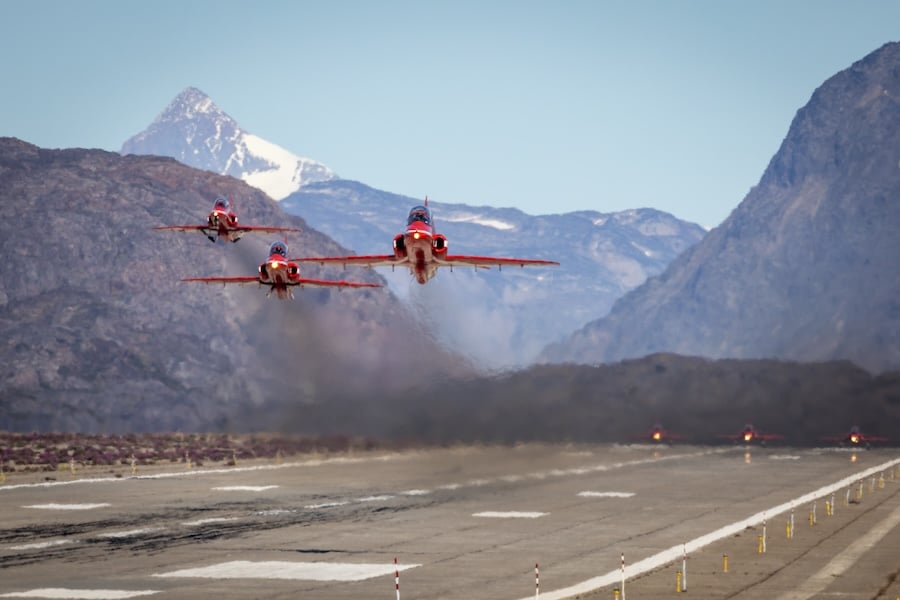
The Red Arrows will provide the programme with its most visible public role, but the investment covers the wider fast-jet training system. The plan does not say whether the display team and military trainees will use the same aircraft type or different variants.
No entry-into-service date, procurement timetable or retirement schedule for the current Hawk fleet has been disclosed. The spending figures are also indicative and remain subject to government approvals, affordability and contracting decisions.