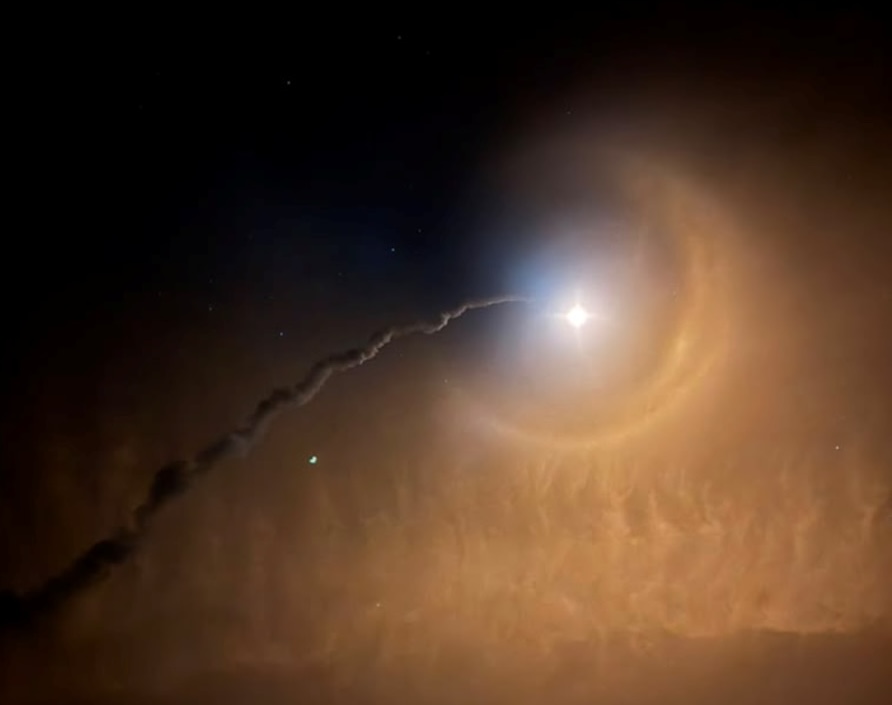
QZS-7 launched aboard a Japanese H-3 rocket from Tanegashima Space Center on Aug. 10. The mission completes the two-launch QZSS-HP programme, which the Space Force describes as the first bilateral U.S.-Japan space cooperation effort focused on national security.
The U.S. payload will be operated by Combat Forces Command’s Mission Delta 2, which conducts space domain awareness operations for the Space Force and U.S. Space Command. Its mission includes identifying and characterising activity in the national security space environment while helping mitigate vulnerabilities.
“The successful launch of QZS-7 is a powerful testament to the enduring strength and rapid modernization of the U.S.-Japan alliance. By continuing to merge our capabilities in space modernization and satellite communications, we are maintaining security in a contested space domain and fortifying our shared deterrence capabilities across the Indo-Pacific region,” said USSF Col. Bryon McClain, Space Force portfolio acquisition executive for Space Combat Power.
“QZSS-HP is a key contributor to help us meet the threat of peer adversaries in space and build towards resilient capabilities to detect, understand, and maintain custody of objects in deep space,” said USSF Col. Gina Peterson, deputy commander of Mission Delta 2 – Space Domain Awareness. The programme consists of two U.S. payloads hosted aboard Japanese satellites, covering their integration, launch and subsequent operations.
Both U.S. payloads were designed and built by the Massachusetts Institute of Technology Lincoln Laboratory in Lexington, Massachusetts. Mitsubishi Electric Corporation designed and built the Japanese Quasi-Zenith Satellites in Kamakura, Japan, to augment U.S. Global Positioning System capabilities in the region.
Space Force and MIT Lincoln Laboratory teams worked alongside Japan’s National Space Policy Secretariat and Mitsubishi Electric for two years to integrate and test the hosted payload with QZS-7. The U.S. payload uses the Multi-Mission Space Operations Center/Enterprise Command and Control – Schriever enclave in Colorado.
The bilateral programme stems from a December 2020 international agreement between the Space Force and Japan’s National Space Policy Secretariat. The Space Force said the cooperation is intended to increase space security, interoperability and resilience between the two countries.
“The U.S.-Japan Alliance is one of our greatest strategic advantages in the Pacific,” said USSF Brig. Gen. Brian Denaro, commander, U.S. Space Forces Pacific. “The QZSS-Hosted Payload program demonstrates how we enhance security across the Pacific. From design through launch, this milestone reflects years of collaboration that strengthen our resilience, enhance interoperability, and reinforce the alliance’s ability to deliver operational advantage across our combined and joint forces.”
“Partnerships like this don’t simply produce new capabilities, they build the trust, integration, and readiness that strengthen deterrence, reinforce our collective security, and preserve freedom of action in, from, and to space.” Mission Delta 2 is headquartered at Peterson Space Force Base, Colorado, and maintains a presence at 11 operating locations.