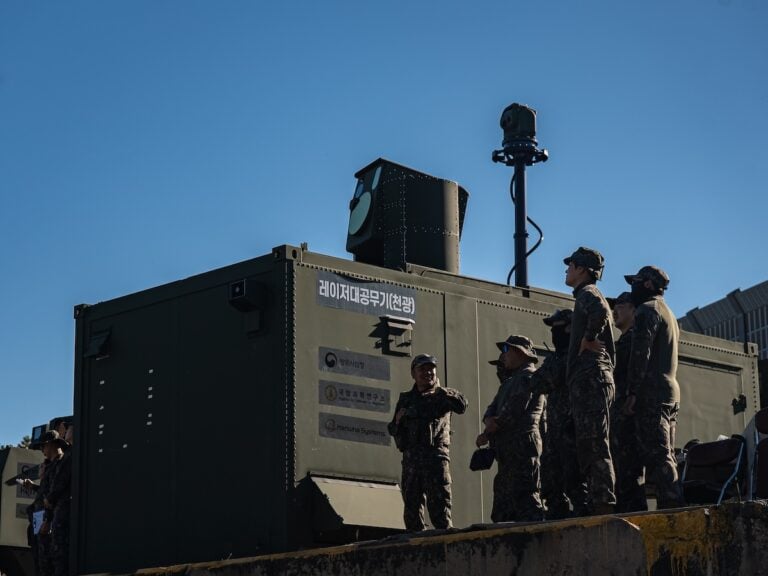
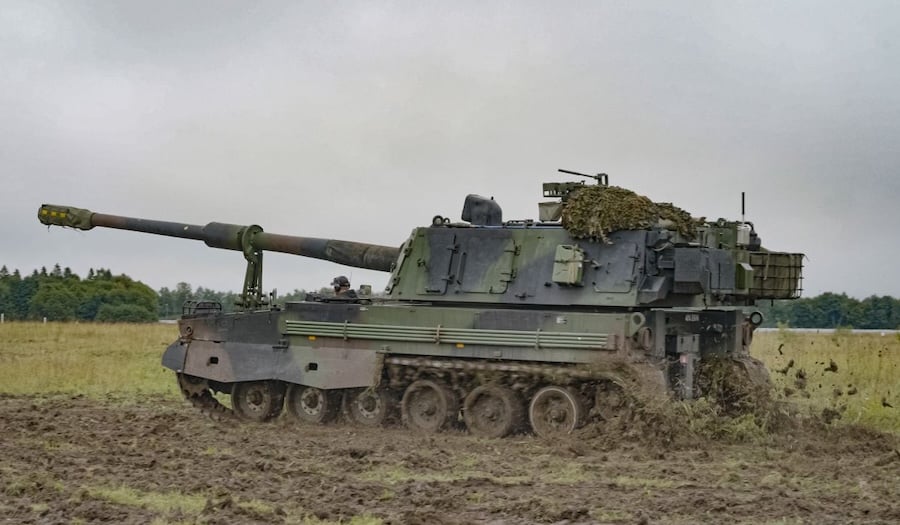
The demonstration took place on the final day of the fifth K9 User Club, which was hosted by the Estonian Defence Forces from 2 to 4 September. The three-day forum gathered more than 200 military and industry representatives at the Estonian National Museum before participants travelled to Tapa for the field visit.
Delegations attended from seven K9 user countries — South Korea, Estonia, Poland, Norway, Finland, Romania and Australia — while Spain and Sweden participated as observers. The forum was designed to allow operators to exchange experience, strengthen partnerships and contribute to the future development of artillery capabilities.
“The K9 has established itself as an outstanding and highly capable artillery system. Its performance, reliability, and operational capabilities have earned the trust of a growing number of NATO allies and partner nations,” said Major General Viktor Kalnitski, Deputy Commander of the Estonian Defence Forces.
Discussions covered operational lessons, maintenance practices, ammunition interoperability, training and future capability requirements. The Tapa demonstration gave users an opportunity to examine counter-UAS technology in an operational setting and consider how battlefield experience could shape future employment and development of the K9.
Hanwha Aerospace also presented a next-generation operating concept that would integrate a vertical take-off and landing fire-guidance drone directly into artillery missions. The drone is designed to detect and track targets, generate coordinates, transmit them to the fire-direction system and remain over the target area to observe impacts and conduct battle-damage assessment.
The company also outlined wheeled artillery concepts incorporating the fully automated turret developed for the K9A2, seeking greater mobility and deployment flexibility while retaining technology derived from the tracked platform. These concepts formed part of Hanwha’s broader plan to develop the K9 beyond a conventional self-propelled howitzer into a more connected and adaptable artillery system.
Participants were also shown Hanwha’s TOMMS Sustainment Portal, which digitises spare-parts procurement and logistics through a single platform covering quotation requests, orders and delivery tracking. Hanwha plans to connect the system with its parts warehouse in Poland and use maintenance and operational data to support predictive sustainment.
“The K9 User Club has become much more than an annual gathering. It is a collaborative platform where users, operators, and industry work together to transform operational experience into future capability development,” said Peter JK Bae, Hanwha Aerospace’s Senior Executive Vice President and Head of its MRO Business Division.
The Tapa visit concluded three days of operational discussions, technology presentations and exchanges among K9 users. Australia is scheduled to host the next K9 User Club in 2027.