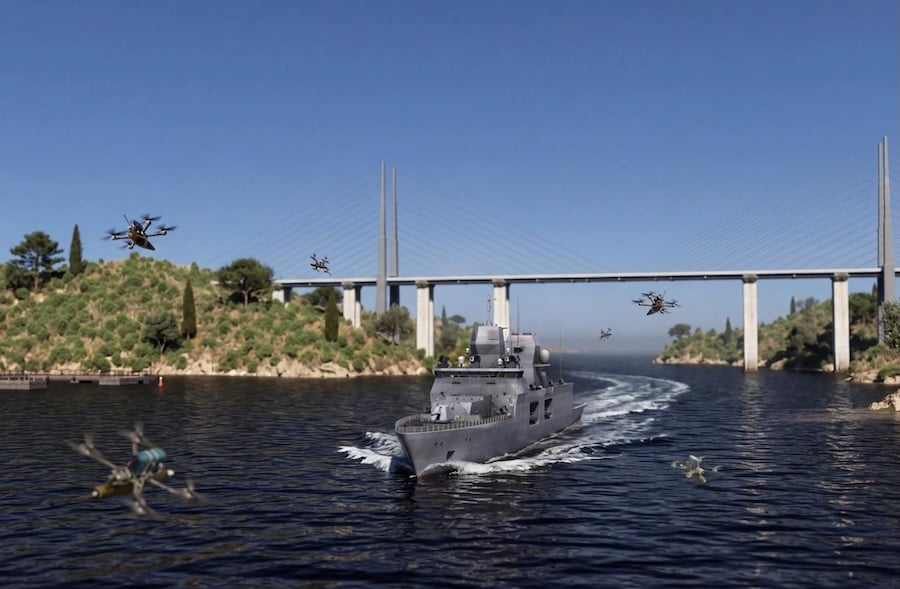
The company said recent conflicts had shown that small, low-cost drones deployed in large numbers could threaten heavily armed warships. SCILT NAVAL was designed to bridge the gap between passive protection and wider air-defence systems.
The system was intended for situations in which ships faced immediate threats in ports or confined waterways such as canals. It was also developed for amphibious operations, landing craft and fixed maritime installations.
SCILT NAVAL was designed to engage FPV drones, one-way attack systems and loitering munitions. It could respond to a single target or several simultaneous attacks.
Sensors, effectors and operating controls were installed directly aboard the vessel. The sensor package combined electro-optical equipment with additional close-range sensors to detect threats and support operational decisions.
The initial configuration operated with a human in the loop. Mehler Protection planned further automation once certification requirements and operational procedures permitted it.
The system used three alert levels covering detection, approach and engagement. Its effectors used commercially available shotgun calibres, with variants ranging from fragmentation to armour-piercing ammunition.
Compared with the land-based SCILT system, the naval version offered greater effective range and automatic reloading. It could be integrated with a ship’s existing command-and-control and sensor systems.
Where no suitable interface was available, SCILT NAVAL could function independently through its own detection and engagement chain. Additional displays and control units could be installed at several locations inside the vessel to give crews access to information and controls where required.