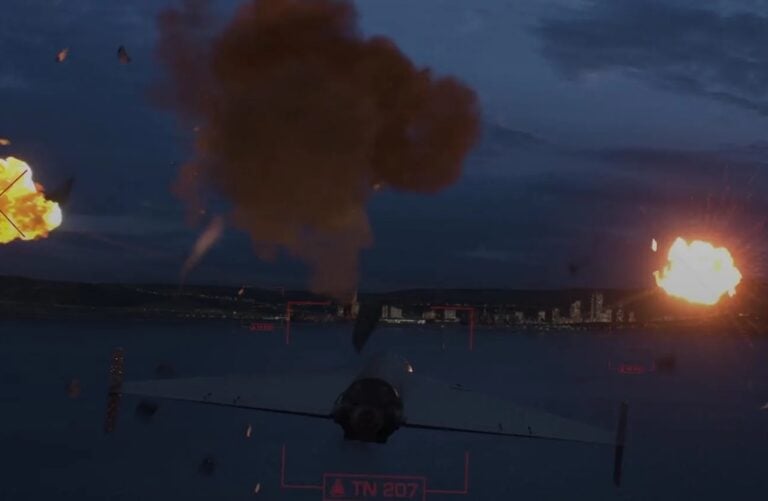
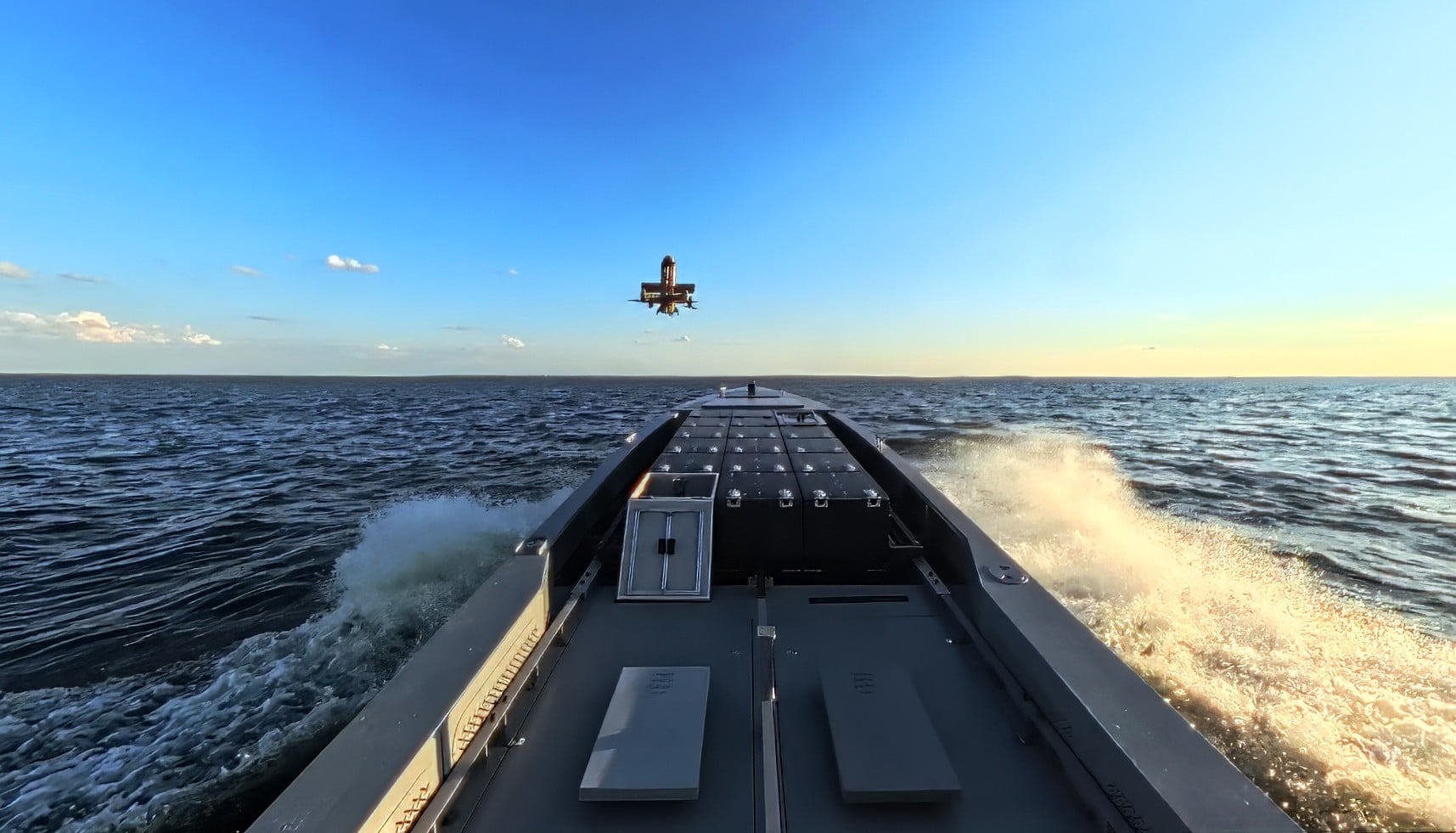
Footage published by Turkish defense outlet SavunmaSanayiST shows interceptor drones launching vertically from individual cells mounted on the vessel’s deck. The arrangement allows aerial interceptors to operate from offshore positions and could extend counter-drone coverage beyond areas served by land-based teams.
The vessel appears to be the Magura MV11, the largest member of the unmanned surface vessel family developed by UFORCE. The company unveiled the 12-meter platform during Ukraine’s Independence Day unmanned-systems parade in Kyiv on Aug. 24.
The MV11 can carry payloads of up to 2,200 kilograms and provides 10 cubic meters of internal volume for weapons, sensors and other mission equipment. UFORCE says the ocean-going platform can remain at sea for up to seven days and operate over distances exceeding 2,000 nautical miles.
One publicly displayed configuration carried 18 vertically launched Sting interceptor drones, giving the unmanned vessel a dedicated counter-UAS role. The Sting, developed by Wild Hornets, is designed to engage Shahed, Geran and Lancet attack drones as well as Russian reconnaissance UAVs.
According to its manufacturer, Sting can reach speeds of up to 280 kilometers per hour and altitudes of as much as 7,000 meters. Its maximum range is 37 kilometers, depending on payload, battery configuration and operating conditions.
Deploying the interceptors from an unmanned surface vessel could allow Ukraine to position interception capability along likely Russian drone flight routes over the Black Sea and coastal approaches. The concept places the interceptor launch point offshore rather than limiting it to fixed or mobile positions on land.
The MV11 can also carry a stabilized 12.7 mm remote weapon station and sensors for radar surveillance and target tracking. UFORCE describes the air-defense configuration as a potential means of protecting coastal areas and strategic waterways against aerial and unmanned threats.