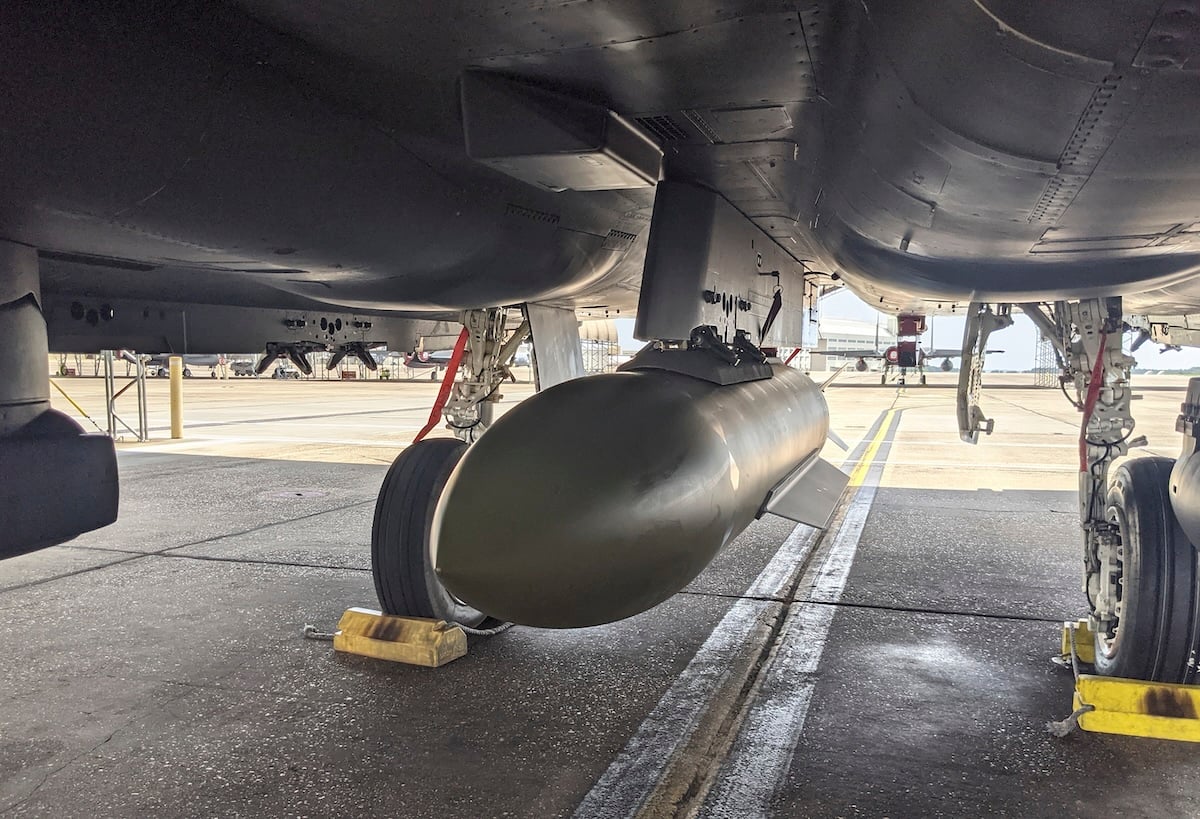
U.S. Central Command had announced the strikes two days earlier, describing the weapons as 2,300-kilogram penetrating bombs without naming them. Caine did not disclose how many were dropped or which aircraft carried them.
The strikes were the first use of the GBU-72/B during Operation Epic Fury, according to the Air Force. The weapon had already made its combat debut in late May 2024 during Operation Prosperity Guardian.
A U.S. Air Force aircraft dropped a single bomb against underground Houthi facilities in Yemen during that operation. The service did not release further details.
Boeing developed the GBU-72/B to replace the GBU-28/B, which entered service in 1991. The newer weapon weighs approximately 2,300 kilograms and measures about 4.6 meters long and 570 millimeters in diameter.
Its BLU-138/B penetrating warhead forms the bomb’s body, paired with a modified JDAM tail-guidance kit. The guidance system combines inertial navigation with GPS corrections, while two narrow body-mounted strakes help stabilize flight.
The warhead weighs approximately 2,000 kilograms, including about 484 kilograms of explosive material. Its penetration capability remains classified, although the Air Force describes it as “significantly better” than that of the GBU-28/B.
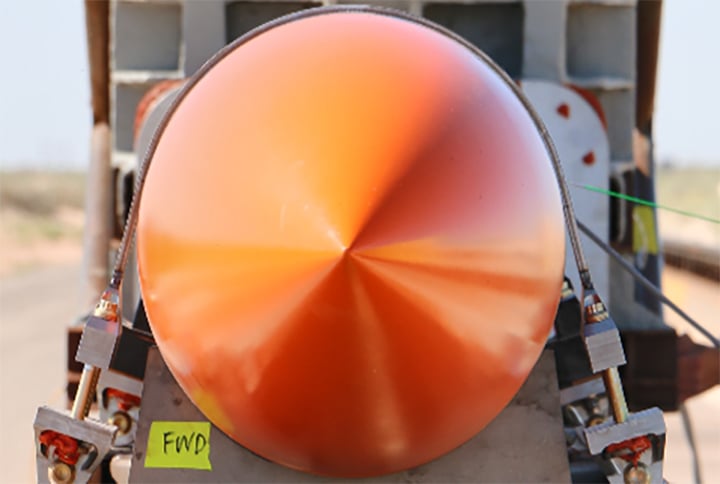
The GBU-72/B is intended to produce the required effect against hardened targets with fewer bombs. By weight, it falls between the approximately 910-kilogram GBU-31(V)4/B penetrator and the 14,000-kilogram GBU-57/B Massive Ordnance Penetrator.
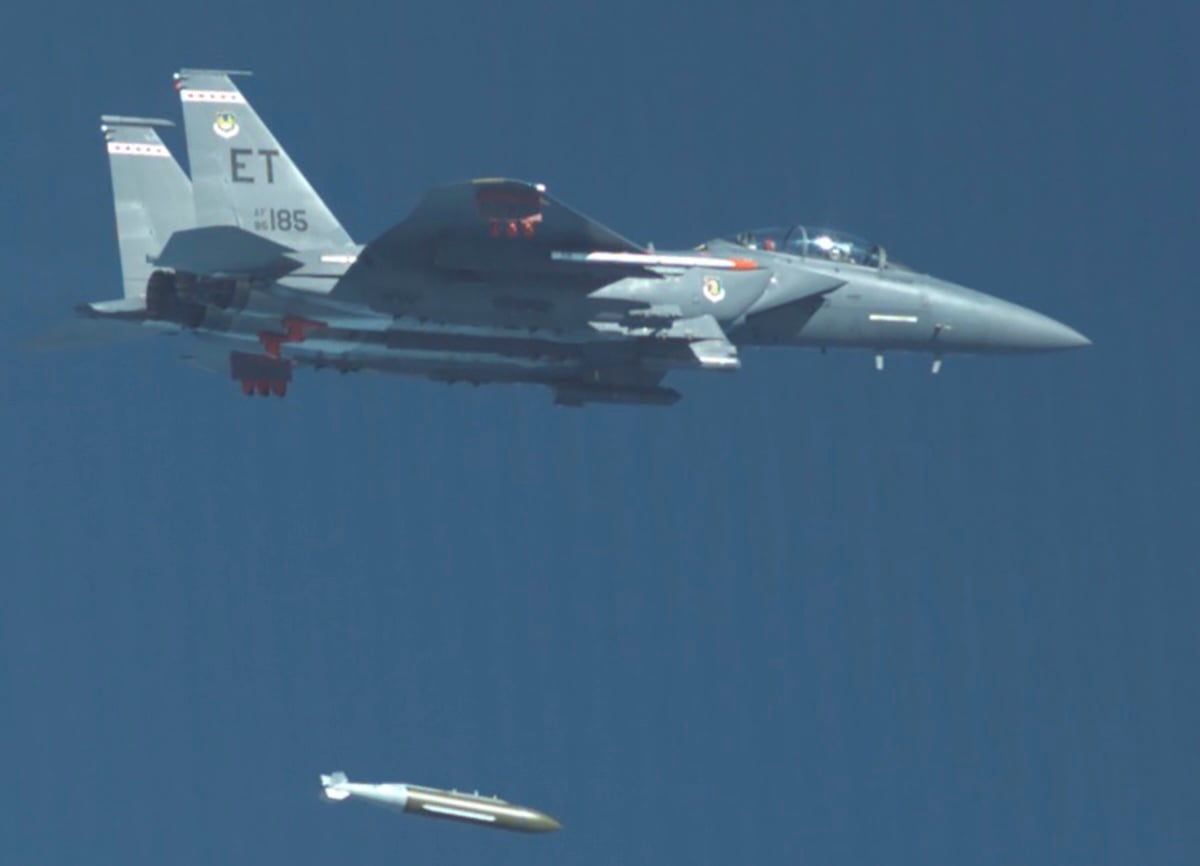
The 780th Test Squadron and 40th Flight Test Squadron began testing at Eglin Air Force Base, Florida, on July 23, 2021. Early work covered loading, flight carriage and separation of unarmed weapons from an F-15E Strike Eagle.
An armed example was dropped over the Eglin range from approximately 10,660 meters on October 7, 2021. Further tests in 2022 examined guidance performance and targeting accuracy.
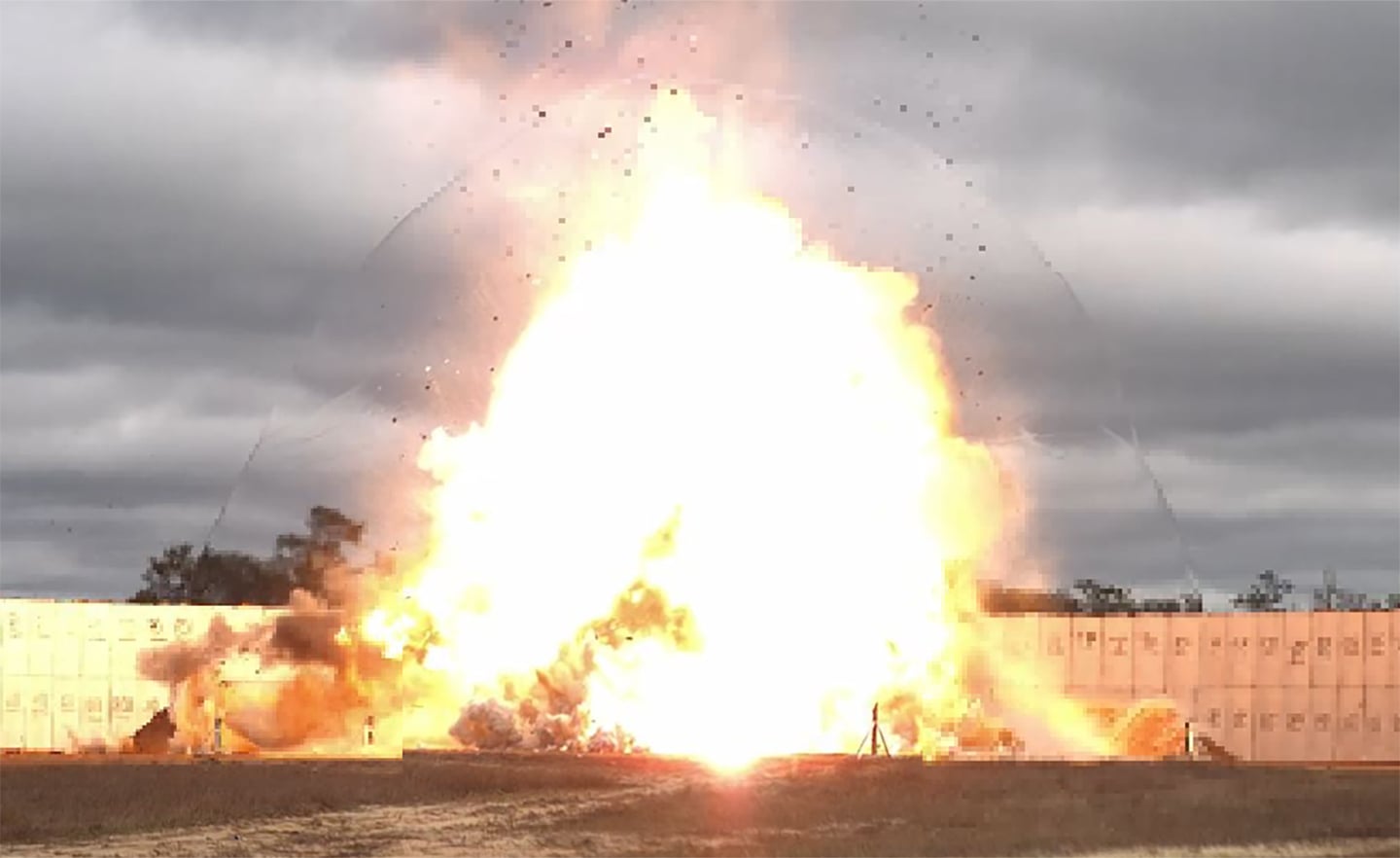
The 57th Munitions Squadron developed procedures for assembling, arming and loading the bomb. The 780th Test Squadron also conducted surface detonations to evaluate explosive performance.
The F-15E Strike Eagle and B-1B Lancer have been adapted to carry the GBU-72/B. An F-15E can carry up to three on its underwing and centerline stations.
The B-1B can carry the weapon internally on a rotary launcher. Images published in June 2024 also showed a test aircraft carrying an inert bomb on a forward starboard external station.