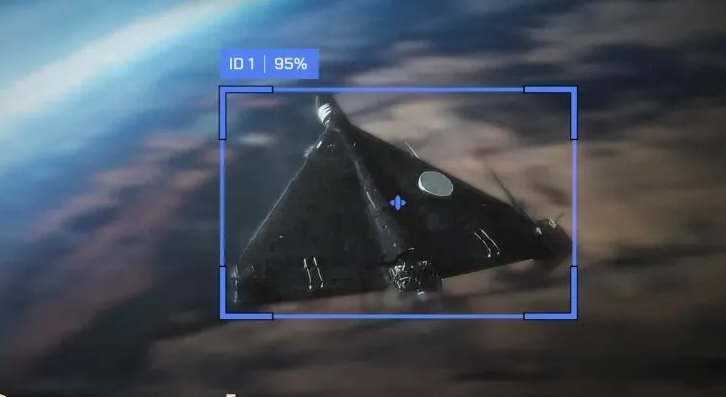
More than 200 Ukrainian companies currently manufacture AI-enabled drones, while the state-run Brave1 Market offers 46 AI solutions for military users. Those technologies include target-recognition systems, optical stabilisation and automatic terminal-guidance modules.
The growing use of AI is changing how Ukraine employs unmanned systems across navigation, target identification and engagement. The ministry said algorithms are increasingly taking on combat functions, although a human operator retains the final decision on target selection and engagement.
Computer vision allows drones to navigate without satellite positioning by comparing terrain and landmarks with stored maps. The approach is designed to maintain positioning during both day and night operations when GPS signals are unavailable.
Neural networks can also analyse imagery to detect equipment and personnel, while computer vision can maintain a lock on a target during the final approach. That allows a drone to continue towards the target autonomously after communications with its operator are disrupted by electronic warfare.
The ministry said AI is increasingly being used across the kill chain, including detection, identification, engagement and assessment of results. Scaling those capabilities depends heavily on access to large volumes of verified battlefield data for training and validating algorithms.
More than 100 Ukrainian companies have received access to Brave1 Dataroom, a secure platform providing structured datasets for military AI development. The datasets cover multiple types of targets under different weather conditions, times of day and sensor configurations, including visual and thermal imagery.
Ukraine has also opened its Avengers Labs platform to domestic defence companies developing AI models for unmanned systems. The platform is built around an annotated dataset of five million battlefield frames, with most of the information sourced directly from the DELTA combat system and continuously supplemented with new data.
The dataset includes tanks, artillery, air-defence systems, infantry, Shahed drones and reconnaissance UAVs. Avengers Labs currently detects 70% of enemy equipment appearing in video streams from Vezha, a DELTA module, with a single piece of equipment detected in 2.2 seconds, according to the ministry.
The Defence Ministry also launched the Defence AI Centre A1 in March to coordinate the wider adoption of artificial intelligence across the military and the ministry itself. Its projects are focused on analysing combat data, accelerating the kill chain and improving battlefield technologies, with some systems already being tested by military units.